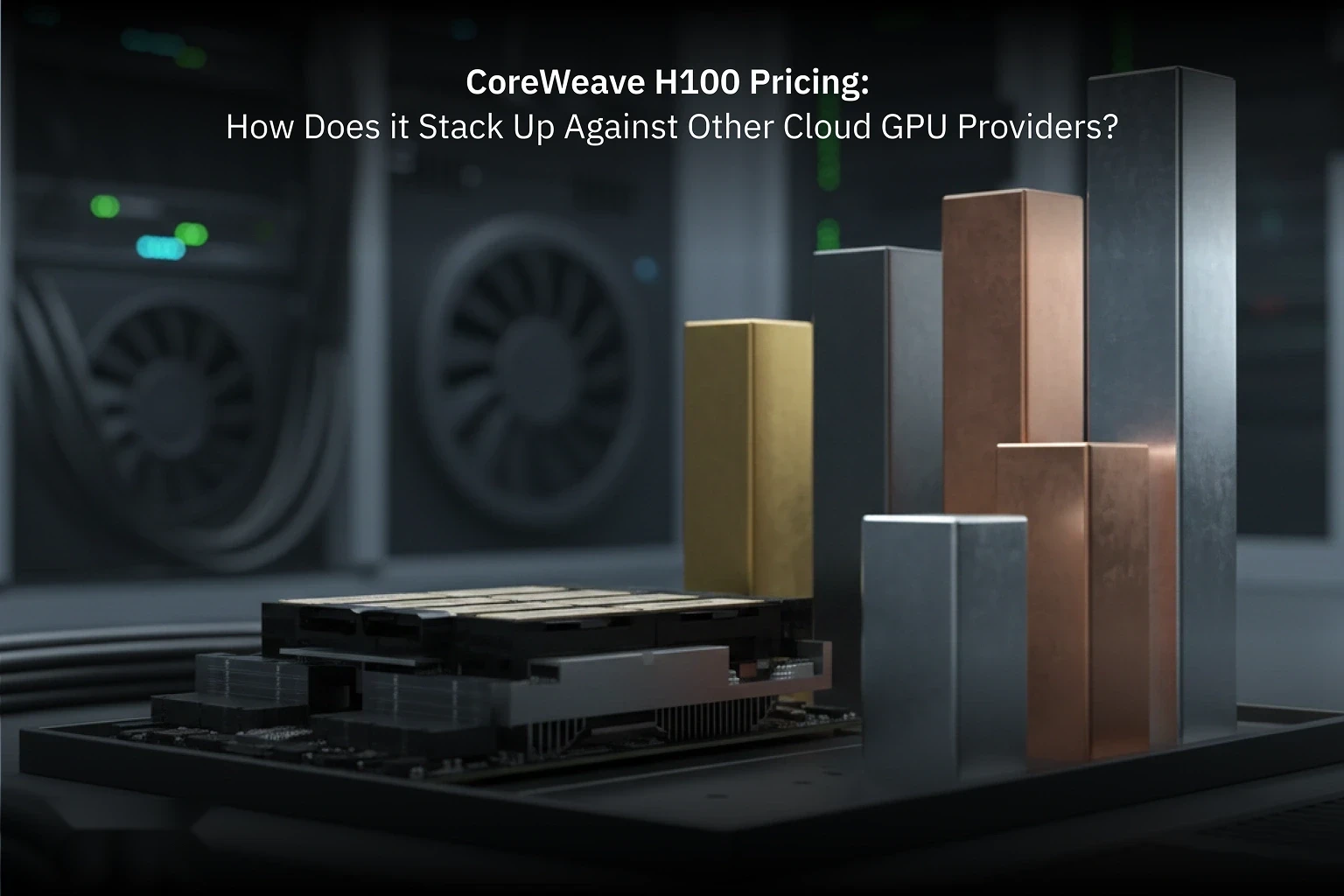
Ask five providers for an H100 price and you will receive five numbers that cannot be compared—different interconnects, different commitment terms, different definitions of “available.” The specialist GPU clouds (CoreWeave being the most prominent) built their business on undercutting hyperscaler list prices, often dramatically. Whether that advantage survives your workload depends on details the rate card omits.
Key Takeaways
- Specialist GPU clouds typically list H100 hours well below hyperscaler on-demand rates—the gap narrows under committed-use discounts.
- The hourly rate is a fraction of the bill: interconnect tier, storage, egress, and idle-but-reserved time decide the real number.
- Hyperscalers charge a premium for ecosystem integration; specialists charge less and assume you bring your own platform.
- Above roughly 50–60% sustained utilization over multi-year horizons, owned or hosted hardware usually beats every rental.
01Why specialist pricing is structurally lower
It is not charity. GPU-focused clouds run leaner: purpose-built for accelerated workloads, Kubernetes-native rather than carrying a decade of general-purpose service overhead, and capitalized specifically to turn GPU inventory fast. Their margin structure tolerates prices the hyperscalers' cannot—particularly for training-scale clusters with proper InfiniBand fabrics, which specialists treat as the core product rather than a premium SKU.
02The five questions that make quotes comparable
- Which interconnect, exactly? An H100 hour on a 3.2Tb/s InfiniBand cluster and one on plain Ethernet are different products. Multi-node training demands the former; quotes must say so.
- What does idle cost? Reserved-but-unused capacity, minimum commitments, cluster-resize friction—the economics of your utilization pattern, not your peak.
- Where does the data live? Dataset storage, checkpoint traffic, and egress for results can rival compute line items at training scale.
- What platform do you bring? Specialists hand you fast metal and expect competence; hyperscalers bundle managed everything at a markup. Price your own engineering time into both.
- What does the exit cost? Data gravity and committed terms decide how negotiable year two is.
03Where owning re-enters the chart
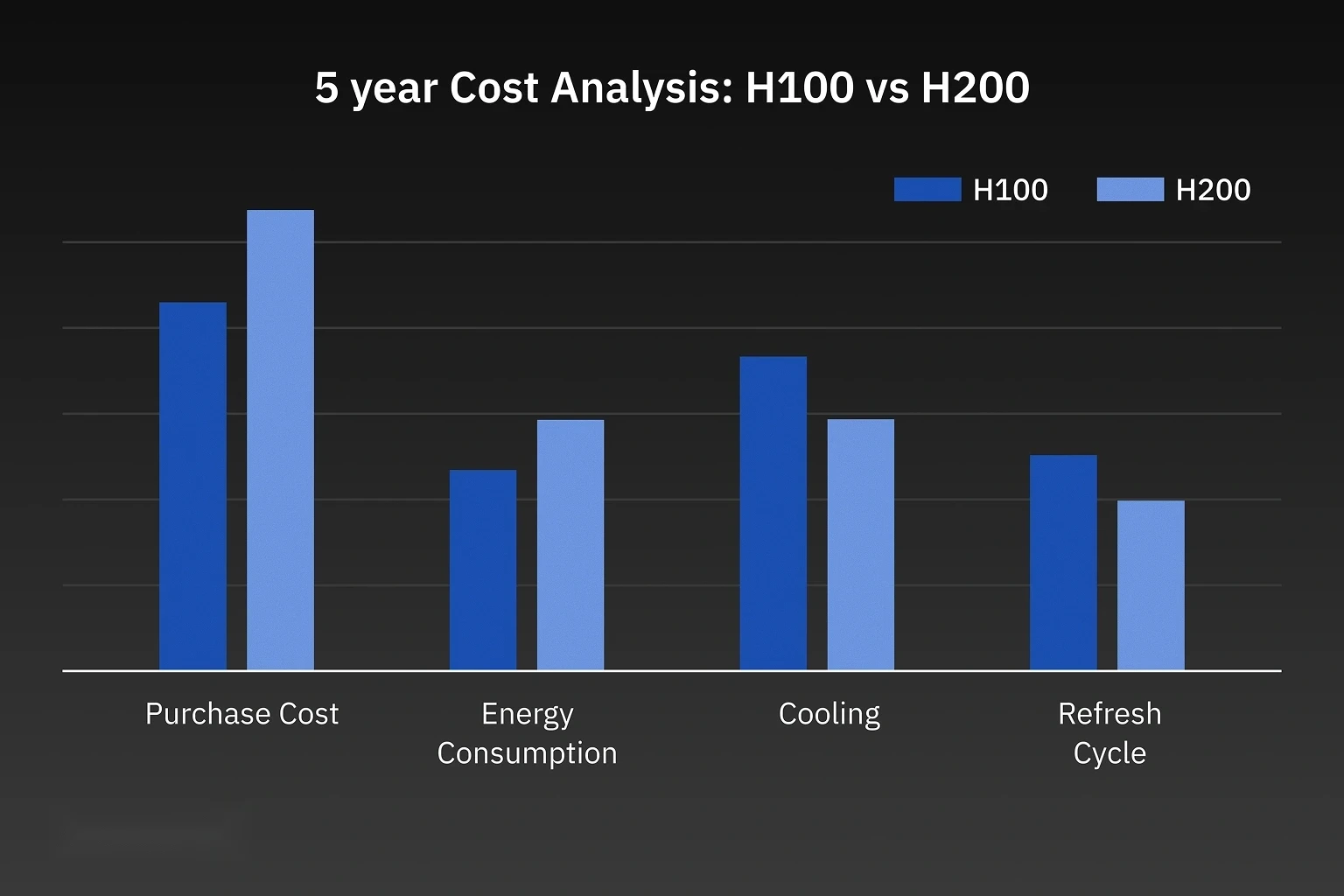
Every rental comparison eventually meets the same crossover: sustained utilization. Run the honest model—hardware, power, hosting, operations—against three years of rented hours at your realistic duty cycle, and owned or partner-hosted H100 capacity typically wins somewhere past 50–60% sustained use. Bursty experimentation rents; steady pipelines buy. Most mature AI estates land hybrid: owned baseline, rented burst.
04The takeaway
CoreWeave-class pricing is genuinely competitive—that pressure is why the whole market's H100 rates fell. But the winning move is not picking the lowest hourly number; it is modeling your workload's full-year invoice across two or three providers and the ownership case, then letting arithmetic, not marketing, choose.
Ready to put this into practice?
Talk to the Semifly team about your infrastructure, security, and compliance roadmap.
Contact Us