
FEATURED STORY OF THE WEEK
Cost of AI server: On-Prem, AI data centres, Hyperscalers


The cost of AI server is a crucial consideration for businesses and organisations looking to leverage the power of artificial intelligence in their operations. This blog will explore the cost implications of on-premises, AI data centres, and hyperscaler solutions, providing a comprehensive analysis to help organisations make informed decisions.
The rapid growth in AI data and model capacity has led to an exponential increase in the computational resources required to train and deploy AI models. While cloud-based AI services have become increasingly accessible, particularly for startups, small to medium enterprises, and e-commerce platforms, evaluating the Cost of AI Server in hyperscaler environments may reveal cost-effective options.On-premise solutions may be more cost-effective for large enterprises, financial institutions, and healthcare providers.
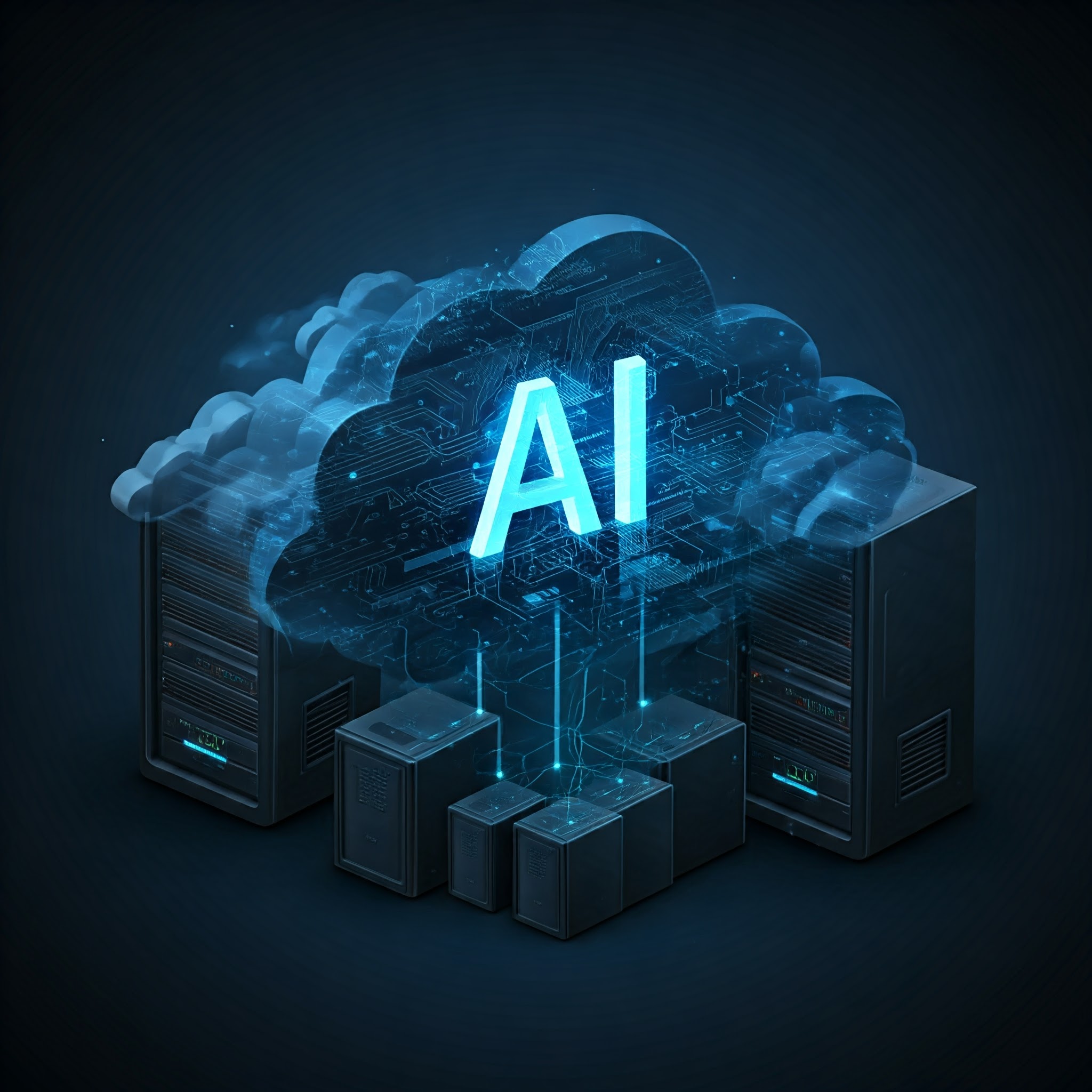
On-Premise AI Servers: Evaluating the Cost of AI Server Ownership
The Cost of AI Server ownership can be a significant investment for organizations, the allure of owning and managing AI servers in-house has its roots in control and customization. For organizations with strict data security requirements or highly specialized workloads, having direct control over the hardware, storage, and network resources can offer an invaluable advantage. However, while the benefits of on-prem AI servers are significant, so are the costs associated with their setup and maintenance.
For companies opting for an on-premises setup, selecting the right hardware is essential to optimizing performance and managing costs. One recommended server is the SuperServer SYS-821GE-TNHR (8U), offers exceptional performance for businesses weighing the Cost of AI Server for intensive workloads, it’s a high-performance, 8U AI server ideal for handling complex, high-intensity AI workloads. This model is equipped with advanced GPUs and memory capacities designed to accelerate machine learning and deep learning tasks efficiently.
Suggested Read: Upgrade Your Storage, Transform Your Business: The SSD Advantage
Understanding the Cost of AI Server for on-premise setups is crucial before comparing alternatives like data centers or hyperscalers.
Benefits of Owning and Managing AI Servers In-House
1. Full Control and Customization
With on-prem AI servers, companies have full control over the configuration, operation, and customization of their hardware, software, and network resources. This flexibility is often essential for businesses with unique or highly specialized workloads, allowing them to optimize hardware configurations for specific AI models or workloads. For instance, Semifly’s PowerEdge XE9680 Rack Server with 8 AMD Instinct MI300X accelerators is a robust solution, offering unparalleled processing power that can be customized to handle intensive AI applications and complex models.
2. Enhanced Security and Compliance: The Cost of AI Server in secure environments can outweigh risks of data breaches.
Companies handling sensitive data, such as those in healthcare, finance, and government sectors, often prefer on-prem solutions for enhanced data security. By hosting data on-site, organizations can minimize exposure to third-party risks and meet stringent data compliance standards (e.g., HIPAA, GDPR, and CCPA) more easily. This is particularly important in industries where data breaches could lead to severe financial and reputational damage.
3. Cost Predictability (to an Extent)
With on-prem AI servers, organizations typically face a predictable CAPEX and OPEX structure once the initial investment is made. Unlike the variable costs associated with cloud services, on-prem servers offer more stable budgetary planning. However, these costs must be carefully managed to avoid unexpected expenses related to infrastructure maintenance or upgrades.
4. Cost Predictability and Long-Term Savings
While the initial setup cost for in-house servers is high, ongoing operational expenses can be more predictable than cloud-based alternatives, which often operate on fluctuating usage-based pricing models. For organizations with consistent AI workloads, owning servers in-house, such as the A+ Server 2124GQ-NART-LCC, can lead to long-term savings by avoiding unpredictable monthly costs associated with cloud services.
Suggested Read: Building cybersecurity sophistication and resilience for modern financial firms.
AI Data Centers
Unlike traditional data centers, which are built to accommodate a wide range of computing tasks, AI data centers are specifically optimized for the demands of machine learning and AI model training. These facilities often include high-performance GPUs, TPUs, or other AI-optimized hardware essential for complex calculations and large-scale data processing. AI data centers emphasize efficient cooling and power management solutions, as AI hardware can produce substantial heat and consume high amounts of energy during processing. With costs often in the range of $15,000 to $50,000 for initial setup, companies can benefit from shared infrastructure and specialized services without committing to full hardware ownership.
A powerful server example is the SuperServer SYS-521GE-TNRT with 8x NVIDIA H100 GPU, which is designed to handle even the most demanding AI workloads. With eight cutting-edge NVIDIA H100 GPUs, this server provides exceptional processing power for deep learning and large dataset analysis, making it an ideal choice for companies looking to accelerate their AI projects.
Suggested Read: Upgrade Your Storage, Transform Your Business: The SSD Advantage
Hyperscalers
As AI adoption grows, hyperscalers like Amazon Web Services (AWS) ,Google Cloud Platform (GCP) , and Microsoft Azure have become popular choices for companies seeking scalable, on-demand AI infrastructure. These tech giants offer specialized, AI-optimized cloud infrastructure, allowing businesses to control vast computing resources without the capital investment needed for on-premises servers.
Hyperscaler AI-Optimized Infrastructure – Understanding the Cost of AI Server Deployment in the Cloud
Hyperscalers provide dedicated AI hardware, such as GPUs and TPUs, along with custom-built infrastructure for deep learning, natural language processing, computer vision, and more. For instance, AWS offers services like Amazon SageMaker, which simplifies building, training, and deploying machine learning models. Similarly, Google Cloud’s Vertex AI and Azure’s Machine Learning provide powerful, managed tools that streamline development and experimentation. These platforms support a range of frameworks, from TensorFlow to PyTorch, and come with optimised AI instances designed to support the most demanding workloads.
Suggested Read: From Predictive Modeling to AI: The Transformative Power of Advanced Data Analytics
Pricing Models

One of the major advantages of hyperscalers is their flexible pricing structures. With a pay-as-you-go model, users only pay for the resources they use, making it ideal for companies testing small AI models or managing intermittent workloads. Costs can be as low as $0.10 per hour for smaller GPU instances, but for businesses with more predictable, sustained AI needs, reserved instances can be a cost-effective option. By committing to a specific instance type and duration, users can secure significant discounts- sometimes up to 75% compared to on-demand rates. Flexible pricing structures significantly influence the Cost of AI Server deployment in hyperscalers.
Suggested Read: Restoring Trust in the Digital Age: A Roadmap to Recovery
Cost of AI server- On-Premises, AI Data Centers, and Hyperscalers
On-premises setups come with high upfront costs, covering the purchase of AI servers, infrastructure, and facility upgrades. For instance, a powerful, high-performance server like the PowerEdge XE9640 Rack Server with 4 NVIDIA® H100® GPUs is an exceptional choice for organizations focused on intensive deep learning tasks. This server is designed to handle large-scale AI workloads, providing the necessary power and efficiency for complex computations.
The deployment of AI servers can be skillful in three main ways- on-premises, within dedicated AI data centers, or through hyperscaler providers (such as AWS, Google Cloud, or Microsoft Azure). Each of these options comes with distinct cost structures, benefits, and considerations, which are critical to understanding in order to optimize expenses and efficiency.
| Cost Factors | On-Premises | AI Data Centers | Hyperscalers |
|---|---|---|---|
| Cost of AI Server Initial Capital Expenditure (CAPEX) | High – Requires investment in hardware, infrastructure, and facilities for server housing. | Moderate – Usually a one-time setup fee, with leasing options. | Low – No upfront hardware costs, as it follows a pay-as-you-go model. |
| Cost of AI Server Ongoing Operational Expenditure (OPEX) | High – Includes energy, cooling, maintenance, and dedicated IT staff. | Moderate – Lower than on-premises, with efficient energy and cooling setups. | Varies – Usage-based fees for computing, storage, and data transfer. No in-house maintenance is needed. |
| Hardware Customization | Full control over hardware and customization. | Limited – Options depend on the data centre provider. | Limited – Configuration options depend on the cloud provider. |
| Scalability | Limited – Expensive and slower to scale up. | Moderate – Easier than on-premises but with physical constraints. | High – Easily scalable on-demand to meet workload spikes. |
| Data Transfer Costs | Low – Data remains on-premises, no transfer fees. | Moderate – Dependent on volume and provider terms. | High – Data egress fees can be substantial, especially for high-volume projects. |
| Server Type | Customizable for specific AI workloads, e.g., GPU/CPU configurations. | Dependent on provider options but generally customizable. | Highly flexible with a range of instances optimized for various AI tasks. |
| Workload Intensity | Best suited for consistent, high-demand workloads. | Suitable for moderate, sustained workloads. | Ideal for variable or unpredictable workloads. |
| Total Cost of Ownership (TCO) |
Short-Term (1-3 years): High, due to CAPEX and ongoing OPEX.
Medium-Term (3-5 years): Moderate, with CAPEX amortized over time. Long-Term (5+ years): Lowest, as infrastructure costs are spread out and predictable. |
Short-Term (1-3 years): Moderate, with a mix of setup fees and leasing costs.
Medium-Term (3-5 years): Competitive, without the need for hardware replacement. Long-Term (5+ years): Moderate, with ongoing rental costs balanced against predictable pricing. |
Short-Term (1-3 years): Lowest, as costs scale with demand.
Medium-Term (3-5 years): Competitive, but usage fees may add up. Long-Term (5+ years): Highest, with ongoing usage fees potentially exceeding initial CAPEX of on-premises solutions. |
Suggested Read: Revolutionizing Data Center Networking: AI Trends to Watch by 2025
Conclusion
On-premises solutions, despite their high initial costs, often offer the lowest TCO over extended time frames, especially for consistent, high-demand AI workloads.
Ultimately, the Cost of AI Server depends on deployment choices, workload intensity, and time horizons. The best AI server deployment choice depends on workload intensity, expected data transfer volumes, and project time horizons. When considering the cost of AI server, hyperscalers provide flexibility and are cost-efficient for short-term or variable workloads, while AI data centres strike a balance between CAPEX and OPEX. On-premises solutions, despite their high initial costs, often offer the lowest TCO over extended time frames, especially for consistent, high-demand AI workloads.
Are you prepared to use cutting-edge AI technologies to drive your company? Performance, adaptability, and scalability are provided by Semifly’s AI server solutions, which are customized to meet your specific requirements. We have the infrastructure and know-how to support your success whether you’re establishing on-premises, collaborating with a data centre, or investigating cloud solutions.
Explore our range of solutions and discover how Semifly optimizes the Cost of AI Server for your business. Discover the possibilities of AI-driven expansion by visiting Semifly’s Marketplace right now. Make the right decision for your company and let’s work together to improve your AI capabilities!

More Similar Insights and Thought leadership
No Similar Insights Found
Subscribe today to receive more valuable knowledge directly into your inbox
We are writing frequenly. Don’t miss that.
Subscribe to get updates

Unregistered User
It seems you are not registered on this platform. Sign up in order to submit a comment.
Sign up now