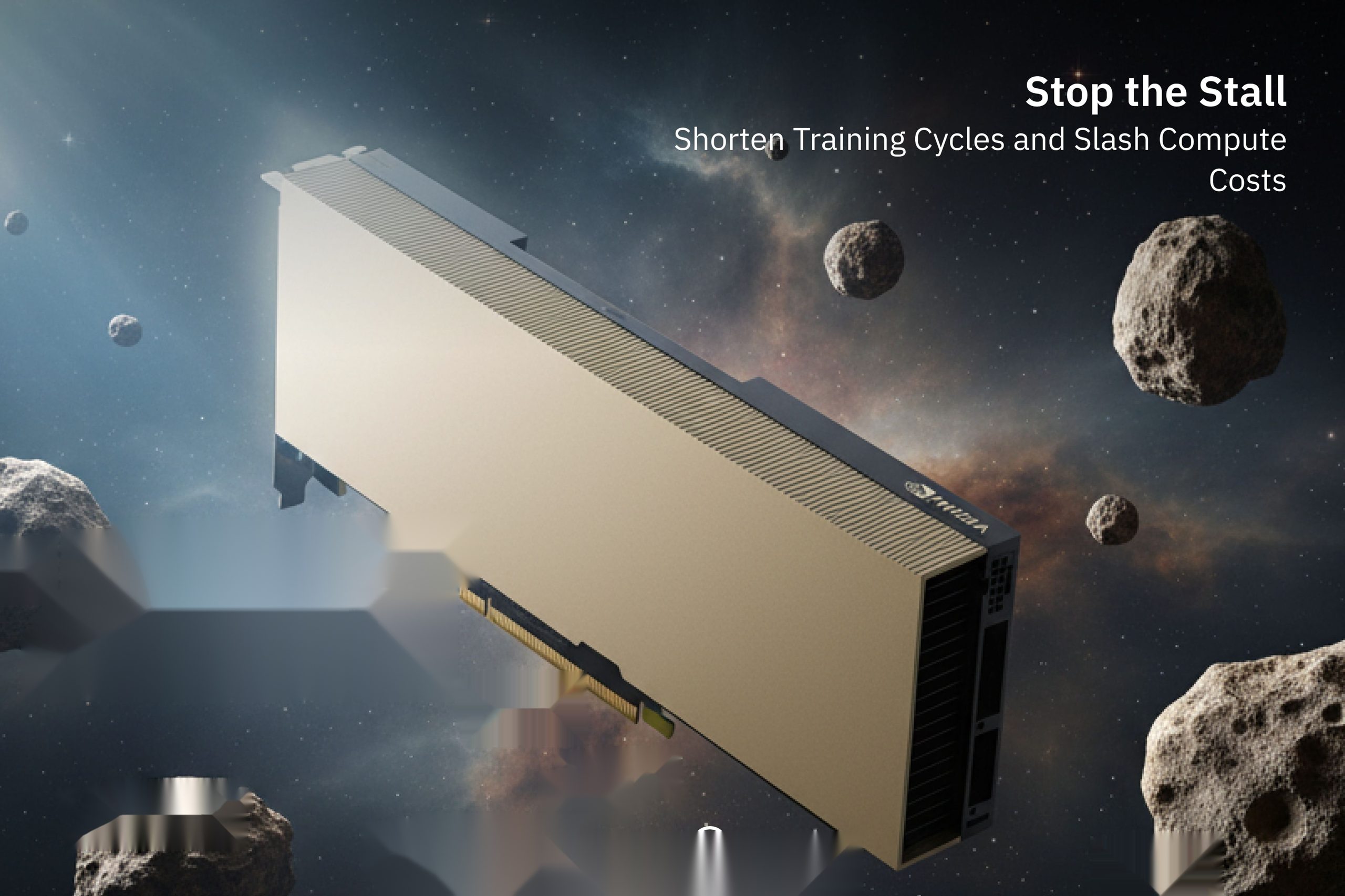
Enterprise AI has moved from pilots to production, and production means scale. The pairing of NVIDIA's H200 GPU with NVLink interconnect gives enterprises a path to grow from a single server to a full cluster without re-architecting at every step.
Key Takeaways
- Bigger on-GPU memory means fewer GPUs and simpler operations.
- NVLink keeps multi-GPU scaling close to linear.
- Standardized building blocks make capacity planning predictable.
- The same architecture serves both training and high-throughput inference.
01More memory, bigger models
The H200's 141 GB of HBM3e and high memory bandwidth let a single GPU hold larger models and longer context windows. For enterprises, that translates directly into fewer GPUs per workload, simpler deployment, and lower cost per inference — especially for retrieval-augmented generation and long-document processing.
02NVLink: scaling without friction
When one GPU is not enough, NVLink stitches several into a single high-bandwidth domain. The practical benefit is predictable scaling: doubling GPUs gets close to doubling throughput because the interconnect does not become the bottleneck. That predictability is what lets infrastructure teams plan capacity with confidence.
03From server to AI factory
The strength of the H200-plus-NVLink approach is that it grows with you. Start with a single node for a department's workloads; expand into NVLink-connected clusters as demand rises — all on one coherent architecture. Semifly helps enterprises design that growth path so each expansion builds on the last rather than replacing it.
← Back to Insights