
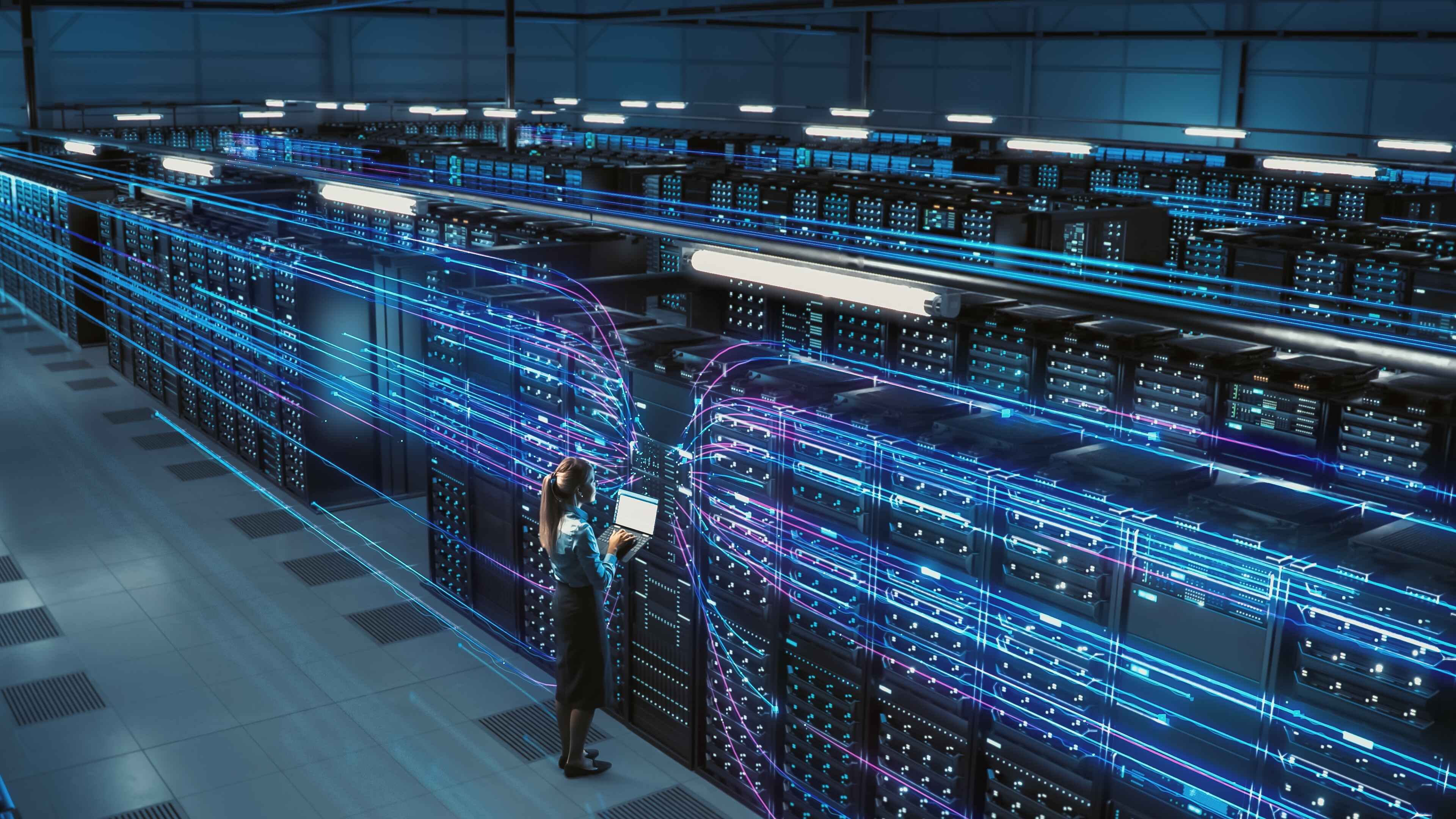
In the fast-evolving world of technology, AI servers are emerging as a transformative force in data centers, reshaping the landscape of modern computing. This revolution is not just about speed and efficiency; it’s about redefining how data is processed, managed, and utilized. AI servers, equipped with advanced machine learning capabilities, are enhancing the performance, scalability, and security of data centers, driving significant improvements across various industries.
01The Rise of AI Servers in Data Centers
Artificial Intelligence (AI) has been a game-changer in many fields, from healthcare to finance. Its integration into data centers marks a pivotal shift in how we handle vast amounts of data. Traditional servers, while powerful, often struggle with the demands of contemporary data processing needs. AI servers, however, are designed to manage and analyze large datasets with unprecedented speed and accuracy.
02Key Benefits of AI Servers
1.Enhanced Performance: AI servers leverage machine learning algorithms to optimize computing processes. They can predict workloads, dynamically allocate resources, and ensure efficient data handling, leading to improved overall performance.
2.Scalability: AI servers offer seamless scalability, allowing data centers to grow in line with increasing demands. This scalability is crucial for businesses that experience fluctuating data processing needs.
3.Energy Efficiency: By optimizing resource allocation, AI servers reduce energy consumption. This not only lowers operational costs but also contributes to environmental sustainability, a critical concern in today’s world.
4.Advanced Security: AI servers enhance cybersecurity measures by detecting and mitigating threats in real time. Machine learning algorithms can identify unusual patterns and potential vulnerabilities, ensuring robust protection against cyber attacks.
03How AI Servers Work
AI servers operate by integrating machine learning models into their architecture. These models continuously learn and adapt from the data they process, improving their efficiency and accuracy over time. Here’s a closer look at the components that make AI servers stand out:
1. AI Chips: Specialized AI chips, such as GPUs (Graphics Processing Units) and TPUs (Tensor Processing Units), are designed to handle complex computations. These chips accelerate machine learning tasks, making AI servers significantly faster than traditional servers.
2. Data Analytics: AI servers excel in data analytics, providing deep insights through real-time data processing. They can handle structured and unstructured data, making them versatile tools for various applications.
3. Automated Maintenance: Predictive maintenance is another advantage of AI servers. By analyzing performance data, AI algorithms can predict potential hardware failures and schedule maintenance before issues arise, minimizing downtime.
04Popular AI Servers
Several AI servers are popular in the market, known for their performance and reliability:
1. PowerEdge XE9640 Rack Server: A high-performance server designed for demanding AI workloads, offering exceptional processing power and scalability.
2. Dell PowerEdge AI Server R760xa: Known for its robust AI capabilities, this server supports intensive machine learning and AI applications with high efficiency.
3. PowerEdge XE9680 Rack Server: This server is optimized for high-density AI tasks, providing advanced GPU configurations for accelerated performance.
4. PowerEdge XE8640 Rack Server: Designed for AI and machine learning, this server offers high computational power and flexibility for various AI applications.
5. GPU SuperServer SYS-821GE-TNHR: Featuring powerful GPU support, this server excels in AI and deep learning tasks, making it a versatile choice for data centers.
05Applications of AI Servers
AI servers are making a significant impact across multiple sectors. Here are some notable applications:
1. Healthcare: AI servers are revolutionizing healthcare by enabling rapid analysis of complex medical records and imaging data, leading to faster and more accurate diagnoses. They facilitate personalized medicine by analyzing patient genetics and treatment responses to recommend tailored therapies.
Additionally, these servers speed up medical research by processing massive datasets for drug discovery and epidemiological studies. This significantly reduces the time from research to clinical application.
2. Finance: In finance, AI servers power real-time fraud detection systems that monitor millions of transactions to flag anomalies and prevent security breaches. They enhance risk management through predictive analytics, assessing market volatility and credit risks to optimize investment strategies.
Algorithmic trading platforms leverage AI servers to execute split-second trades based on live market data, maximizing profitability while ensuring compliance with regulatory frameworks.
3. Retail: Retailers use AI servers to forecast demand, optimize inventory, and streamline supply chains, minimizing waste and ensuring product availability. They enable hyper-personalized shopping experiences by analyzing customer behavior to deliver targeted recommendations and dynamic pricing.
Furthermore, AI-driven analytics help retailers identify emerging trends and optimize store layouts, boosting sales and customer loyalty through data-driven decisions.
4. Manufacturing: AI servers enable predictive maintenance by analyzing sensor data from machinery to foresee failures before they occur, reducing costly downtime. They enhance quality control through computer vision systems that detect defects in real-time during production lines. By optimizing energy consumption and production workflows, these servers drive significant cost savings and support sustainable manufacturing practices.
5. Telecommunications: Telecom providers deploy AI servers to dynamically manage network traffic, allocating bandwidth during peak usage to prevent congestion. They proactively identify security threats and automate responses to cyberattacks, safeguarding infrastructure. AI-driven analytics also improve customer service by predicting network issues and optimizing 5G/6G deployments for seamless connectivity.
06The Future of AI Servers
The future of AI servers looks promising, with continuous advancements in AI technology and hardware. Here are some trends to watch:
1. Edge Computing: AI servers will increasingly migrate to edge locations, processing data near their source (e.g., IoT devices or sensors) to eliminate latency for critical applications. This shift will empower real-time analytics for autonomous vehicles, smart factories, and augmented reality.
By reducing reliance on centralized data centers, edge-based AI servers will enhance bandwidth efficiency and data privacy while enabling instant decision-making.
2. AI-Driven Automation: Future data centers will leverage AI servers for end-to-end automation, from resource allocation to predictive troubleshooting, minimizing human intervention. Self-optimizing systems will dynamically adjust workloads based on real-time demands, maximizing hardware utilization.
This autonomy will extend to energy management and security protocols, creating “lights-out” data centers that operate with near-zero downtime.
3. Integration with IoT: AI servers will become the backbone of IoT ecosystems, processing torrents of sensor data to enable smart cities and industrial automation. They’ll provide real-time insights for applications like precision agriculture (monitoring crop health) and energy grids (balancing supply/demand).
As IoT devices proliferate, AI servers will enable decentralized intelligence, allowing devices to collaborate and act autonomously.
4. Sustainable Computing: AI servers will spearhead green data centers by optimizing power consumption through intelligent cooling and workload distribution. Innovations like liquid cooling and renewable energy integration will reduce carbon footprints.
Beyond efficiency, AI will drive circular economy practices—predicting hardware lifespans, automating recycling, and enabling carbon-neutral operations to align with global sustainability goals.
07Conclusion
AI servers are at the forefront of revolutionizing data centers, offering enhanced performance, scalability, and security. Their ability to handle complex computations, analyze vast amounts of data, and automate maintenance tasks makes them indispensable in modern computing. As AI technology continues to evolve, we can expect even greater innovations in how data centers operate, ultimately driving progress across various industries. Embracing AI servers is not just a step forward; it’s a leap into the future of computing.
← Back to Insights