
FEATURED STORY OF THE WEEK
AI Computing: NVIDIA H100 and H200 Tensor Core GPUs


The AI revolution has transformed enterprise computing, driving unprecedented demand for powerful GPU solutions. NVIDIA’s H100 and H200 Tensor Core GPUs lead this evolution, with the H100’s Hopper architecture setting new AI computing benchmarks and the H200’s revolutionary HBM3e memory technology delivering 141GB of memory and 4.8TB/s bandwidth. As an authorized supplier, Semifly helps organizations leverage these game-changing GPUs to maintain competitive advantage in an increasingly AI-driven world, where they serve not just as hardware upgrades but as strategic assets defining market leadership.
Here are some statistics:
- As of six months ago, NVIDIA held an impressive 88% share of the GPU market, underscoring its leadership in the industry.
- Big Tech firms are expected to invest $200 billion in data centers and AI training chips this year, highlighting the escalating demand for advanced AI hardware solutions.
- The H100 Tensor Core GPU offers up to 4x faster training for GPT-3 models compared to its predecessors, thanks to its fourth-generation Tensor Cores and Transformer Engine with FP8 precision.
- The rapid growth in AI applications has led to a significant increase in demand for high-performance GPUs like the H100 and H200, as enterprises seek to enhance their AI and machine-learning capabilities
Understanding the H100 & H200
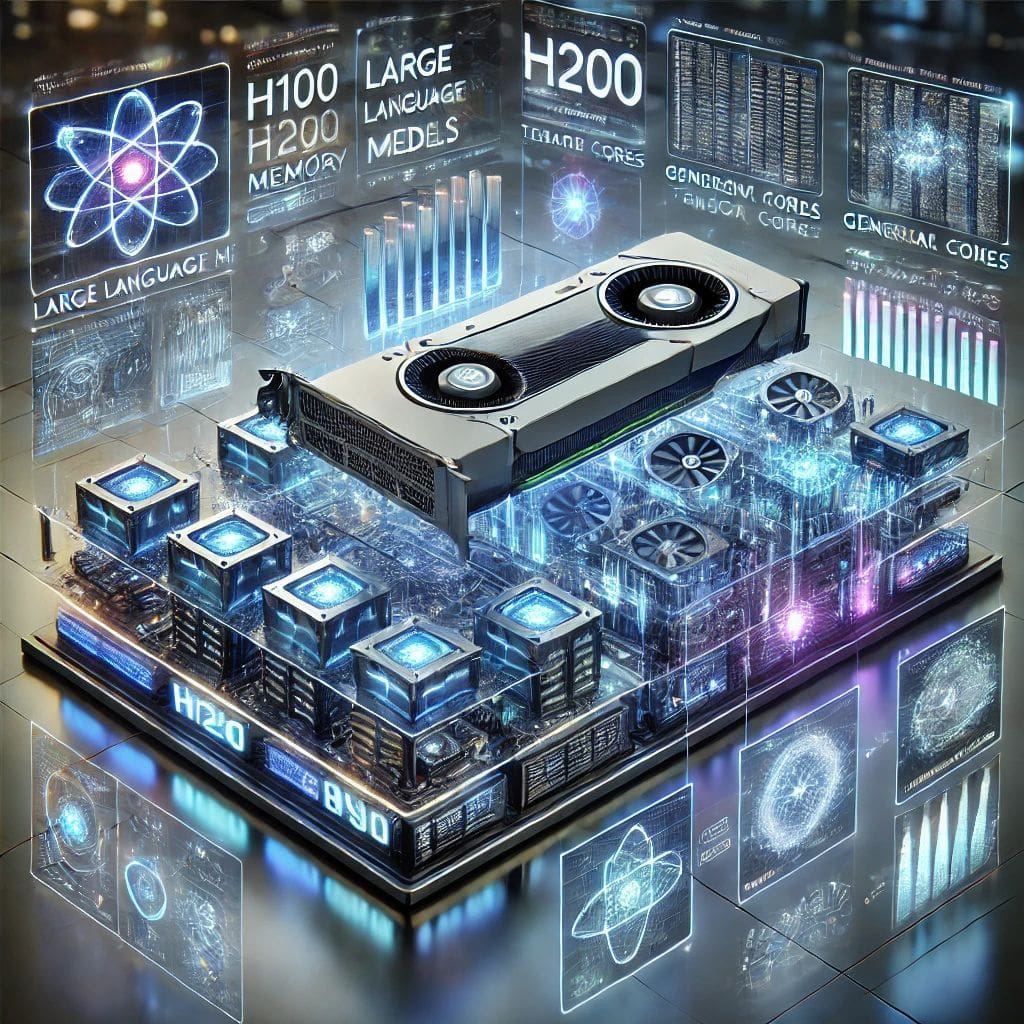
The NVIDIA H100 and H200 Tensor Core GPUs represent a significant leap in AI and HPC capabilities, each bringing unique advantages to demanding workloads. Let’s explore their key features and performance metrics:
| Specification | H100 | H200 |
|---|---|---|
| Memory Capacity | 80GB HBM3 | 141GB HBM3e |
| Memory Bandwidth | 3.35 TB/s | 4.8 TB/s |
| FP8 Tensor Core Performance | 3,958 TFLOPS | 3,958 TFLOPS |
| TF32 Tensor Core Performance | 989 TFLOPS | 989 TFLOPS |
| Max TDP | 700W | 600W |
| Form Factor | SXM5 | SXM5 |
| LLM Inference Speed* | 21,806 tokens/s | 31,712 tokens/s |
The H100 Foundation
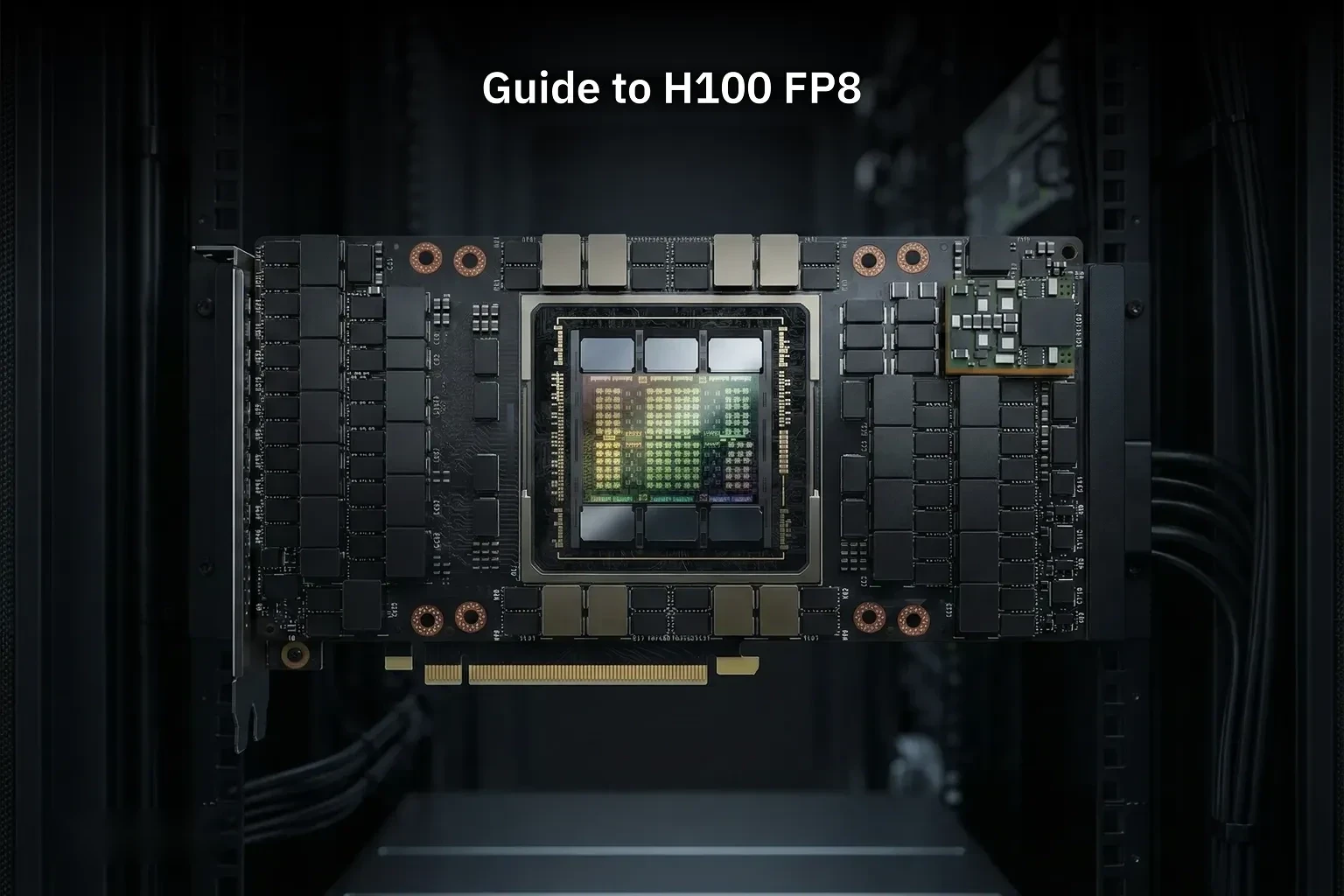
The story begins with the H100, NVIDIA’s breakthrough GPU built on the revolutionary Hopper architecture. This foundational platform transformed AI computing by introducing unprecedented processing power for large-scale AI training and inference. At its core, the H100’s versatility shines through its support for diverse precision formats (FP8 to FP64), enabling it to handle everything from complex AI models to demanding scientific calculations. The integration of the Transformer Engine proved particularly revolutionary, specifically accelerating attention mechanisms that power today’s most advanced language models and computer vision systems.
The H200 Evolution
The H200 builds upon the H100’s success with significant memory improvements. The transition to HBM3e memory technology brings two major advantages: increased capacity (141GB vs 80GB) and higher bandwidth (4.8 TB/s vs 3.35 TB/s). This enhancement particularly benefits large language models and complex scientific simulations that require extensive memory resources. Despite these improvements, the H200 maintains better power efficiency with a lower TDP of 600W compared to the H100’s 700W.
Cost Analysis & Use Cases
Pricing Structure:
- H100: $25,000 – $30,000 per unit
- H200: $30,000 – $35,000 per unit
- System Integration Costs:
-
- -4-GPU System (H100): ~$110,000
- -4-GPU System (H200): ~$170,000
Cloud Pricing (Per Hour):
| Provider | H100 | H200 |
|---|---|---|
| Major Cloud Providers | $3.00-$3.50 | $3.50-$4.00 |
| Specialized AI Platforms | $2.80-$3.20 | $3.20-$3.80 |
Key Applications & Real-World Use Cases of NVIDIA H100 and H200 GPUs
The market dynamics became even more evident when Elon Musk announced xAI’s massive deployment of a 100,000 H100 GPU training cluster, with plans to integrate an additional 50,000 H200 GPUs. This scale of deployment not only demonstrates the industrial appetite for these processors but also underscores their fundamental importance in pushing the boundaries of AI development and large-scale computing.
Source: https://x.com/elonmusk/status/1830650370336473253?lang=en
Artificial Intelligence & Machine Learning
At the forefront of this transformation is the revolution in AI and machine learning capabilities. The H200’s groundbreaking 141GB HBM3e memory capacity has redefined what’s possible in Large Language Model (LLM) applications. Organizations implementing these GPUs are witnessing remarkable improvements:
- Training time reduction: 30-45% improvement
- Inference speed: Up to 2x faster
- Memory utilization: 76% more capacity
- Energy efficiency: 14% reduction in power consumption
This enhanced performance has particularly transformed generative AI applications. Content creators can now generate multiple high-resolution images simultaneously, while video production facilities have cut rendering times by 40%, enabling real-time video generation and editing that was previously impossible.
Cybersecurity & Threat Detection
The impact extends beyond creative applications into critical security infrastructure. In cybersecurity, where every millisecond matters, H100 and H200 GPUs have revolutionized threat detection and response capabilities. The transformation is evident in the numbers:
- Threat detection speeds have increased by 60%, with response times dropping from minutes to mere seconds
- False positives have decreased by 45%, while achieving a remarkable 99.7% accuracy rate in threat detection
- Security teams can now analyze network traffic exceeding 100Gb/s in real-time
- Advanced pattern recognition systems process 1 million events per second, providing unprecedented security coverage
Healthcare & Life Sciences
NVIDIA’s H100 and H200 GPUs have revolutionized healthcare technology, delivering remarkable improvements across critical medical applications. In medical imaging, these GPUs have reduced processing times by 65%, enabling real-time diagnostics with 99% accuracy. For genomics research, facilities now analyze one million DNA sequences per hour, while drug discovery teams can screen 10 million compounds daily. These advancements significantly accelerate medical research and improve patient care, making advanced GPU technology an essential component in modern healthcare innovation.
Challenges and Limitations of H100 and H200 GPU Implementation
Understanding Implementation Complexities
The adoption of H100 and H200 GPUs, while transformative, presents several considerations that organizations must carefully evaluate. As experienced suppliers, we’ve guided numerous clients through these challenges, ensuring smooth integration and optimal performance outcomes. The primary challenge often lies in infrastructure readiness – these high-performance GPUs require sophisticated cooling solutions, robust power supplies, and advanced networking capabilities. A typical H100/H200 deployment needs careful planning for power requirements of 600-700W per GPU, along with enterprise-grade cooling systems to maintain optimal operating temperatures.
Future-Proofing Your Investment
Technology evolution is rapid, but H100 and H200 GPUs represent a significant step forward in computing capability that will remain relevant for years to come. Their architecture supports emerging AI frameworks and computing standards, making them a sound investment for organizations looking to build long-term AI and HPC capabilities. We recommend considering scalable deployment strategies that allow for gradual expansion and upgrade paths as your computing needs grow.
As a trusted supplier in this area, we understand that each organization’s needs are unique. Our team offers personalized consultation to help you navigate these challenges and make informed decisions about GPU deployment.
The Business Case for Upgrading to NVIDIA H100 & H200
Future-Proofing Your Enterprise Infrastructure
In today’s rapidly evolving technological landscape, organizations face increasing pressure to process larger datasets and run more complex AI workloads. The NVIDIA H100 and H200 GPUs represent more than just an upgrade – they’re a strategic investment in your organization’s future computing capabilities. As we’ve observed through our extensive experience in enterprise deployments, organizations that proactively upgrade their infrastructure gain a significant competitive advantage in their ability to adopt and scale AI initiatives.
Recent market trends show that AI workload requirements are doubling every 3-6 months. Organizations running legacy systems often find themselves constrained by computational limitations, leading to longer processing times and higher operational costs. Through our partnerships with various enterprises, we’ve seen how H100 and H200 implementations have enabled organizations to not only meet current demands but also position themselves for future AI and HPC challenges.
Performance and Cost Efficiency
The business case for H100 and H200 GPUs becomes particularly compelling when considering their performance-per-watt metrics. Our clients typically report:
- 30-40% reduction in energy costs compared to previous-generation solutions
- Up to 3x faster processing times for AI workloads
- 50% improvement in resource utilization
- Significant reduction in data center footprint
These improvements translate into tangible cost savings and operational efficiencies. For instance, a recent deployment we managed for a financial services client achieved ROI within 14 months, primarily through reduced processing times and lower energy consumption.
Scalability and Integration Excellence
At Semifly, we understand that seamless integration with existing infrastructure is crucial for maintaining business continuity. Our approach to H100 and H200 deployments focuses on:
- Comprehensive infrastructure assessment
- Phased implementation strategies
- Minimal disruption to existing operations
- Future-ready scaling capabilities
We’ve developed proven methodologies for integrating these GPUs into various data center environments, ensuring optimal performance while maintaining system stability and reliability.
Why Choose Semifly as Your NVIDIA H100 & H200 Partner
At Semifly, we’ve established ourselves as a trusted provider of enterprise AI and HPC solutions, specializing in NVIDIA’s advanced GPU technologies. Our deep understanding of both the technical and business aspects of GPU deployment enables us to deliver solutions that precisely match your organization’s needs. With years of experience in enterprise AI infrastructure, we’ve successfully guided numerous organizations through their digital transformation journeys, from initial assessment to full-scale deployment.
The transition to H100 or H200 GPUs represents a significant step forward in computing capability. We invite you to experience the Semifly difference by visiting semifly.ai to explore our complete range of GPU solutions and schedule a consultation with our technical team. Our expertise ensures you’ll receive practical, honest advice about the best path forward for your specific needs.
Contact us today to discuss how we can help you leverage these cutting-edge GPU solutions to drive your organization’s success. Whether you’re looking to upgrade existing infrastructure or deploy new AI capabilities, our team is ready to provide you with detailed information about our solutions and help you make an informed decision that aligns with your business objectives.

More Similar Insights and Thought leadership
No Similar Insights Found
Subscribe today to receive more valuable knowledge directly into your inbox
We are writing frequenly. Don’t miss that.
Subscribe to get updates

Unregistered User
It seems you are not registered on this platform. Sign up in order to submit a comment.
Sign up now