FEATURED STORY OF THE WEEK
NVIDIA DGX B200 SuperPOD Reference Architecture: A Blueprint for Secure and Accelerated AI

The NVIDIA DGX B200 system represents the next generation of accelerated computing infrastructure, purpose-built for the most demanding AI and HPC workloads. Leveraging the NVIDIA Blackwell Architecture, the DGX B200 is designed to operate as a critical component within massive, industrial-scale supercomputing systems, known as DGX SuperPODs, engineered to handle tasks such as training trillion-parameter models.
The architectural innovation of the DGX B200 focuses heavily on boosting memory capabilities and integrating pervasive, hardware-backed security to ensure data integrity and confidentiality for enterprise and decentralized applications.
1. Core B200 Specifications and Performance Metrics
The Blackwell architecture introduces significant advancements over its Hopper predecessor, notably enhancing the GPU memory subsystem to overcome data bottlenecks in large-scale AI.
| Specification | Details | Comparative Metric |
|---|---|---|
| GPU Architecture | Blackwell | Successor to Hopper |
| GPU Memory | 192GB HBM3e | 76% increase over H100 (80GB HBM3) |
| Memory Bandwidth | 8 TB/s | 1.4× increase over H200 (4.8 TB/s) |
| Inference Performance | 15× faster vs H100 | Accelerated LLM inference speedup |
| Pricing (On-Demand) | $7.99 / GPU / hour | Varies based on provider/region |
| Pricing (Reserved) | $5.63 / GPU / hour (6–12 months) | 29% savings vs on-demand |
Note: Based on publicly available resources on internet and may change.
This massive increase in memory (192GB HBM3e) and bandwidth (8 TB/s) is essential for running extremely large models, such as Llama 4 Maverick 400B or Mixtral-8×22B, at full precision on a single node, simplifying architecture by eliminating complex tensor-parallel splitting across multiple GPUs.
2. DGX B200 System Architecture
The DGX B200 system is a dedicated server that typically integrates an array of high-performance components to maximize AI acceleration.
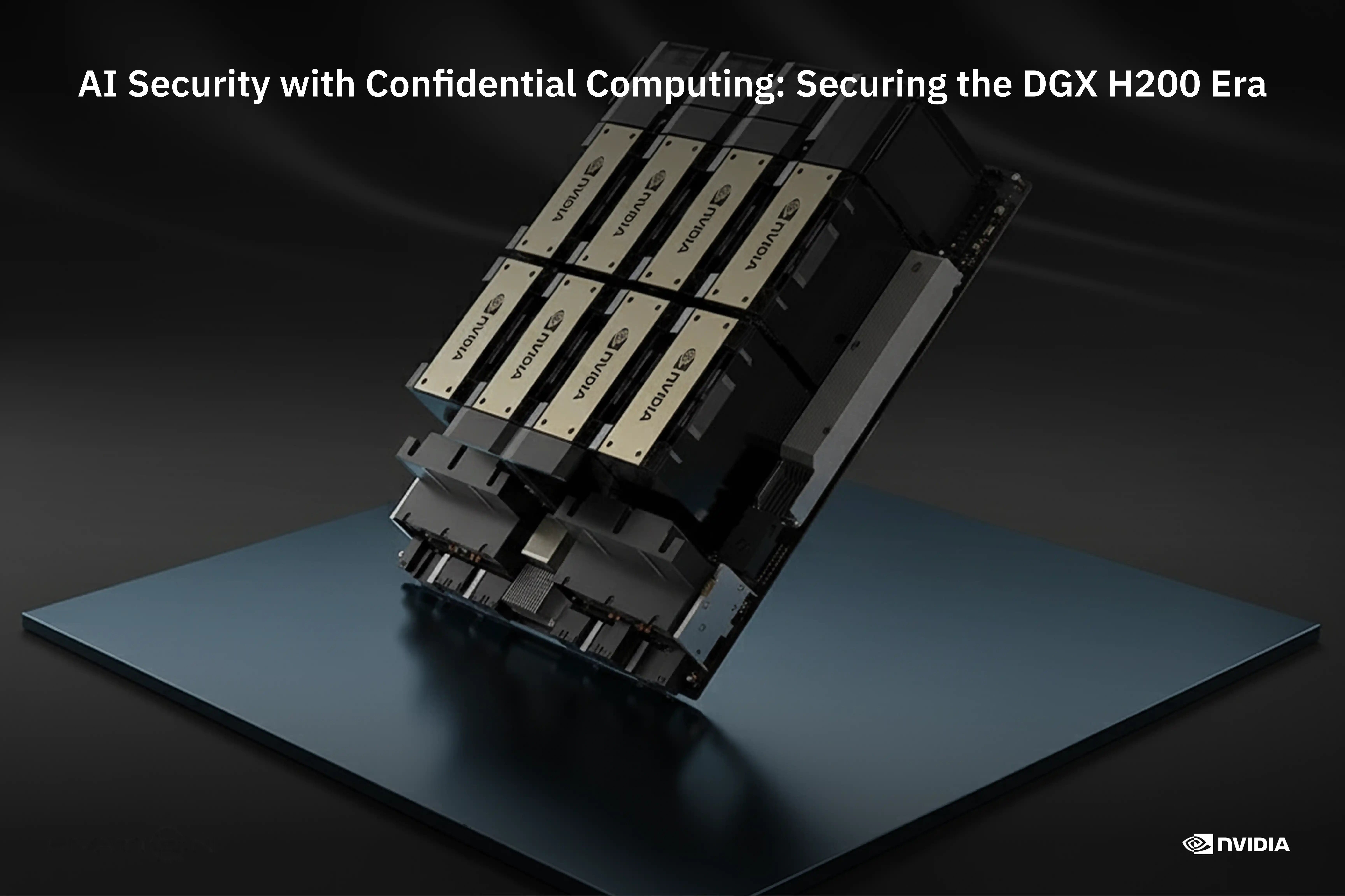
- GPU Configuration: A standard DGX B200 system is designed to house eight NVIDIA B200 Tensor Core GPUs.
- Interconnect: These GPUs utilize fourth-generation NVIDIA NVLink to provide 900 GB/s of GPU-to-GPU bandwidth, ensuring seamless communication within the node.
- Networking: The systems feature NVIDIA ConnectX-7 network cards, supporting speeds up to 400Gbps for InfiniBand and Ethernet. Networking components are consolidated onto modules, utilizing DensiLink cables to connect to OSFP connectors at the rear of the system.
- Data Storage: The system typically includes Self-Encrypting Drives (SEDs) for data caching, often configured in a RAID 0 array for performance, alongside OS storage in a RAID 1 array. The ability to manage these SEDs via the nv-disk-encrypt tool is integral to the system’s security posture.
- System Management: The architecture relies on a dedicated Baseboard Management Controller (BMC) accessible via a 1 GbE RJ45 interface, supporting remote management protocols like Redfish, IPMI, and KVM. The BMC port must be secured using a dedicated management network with firewall protection, or accessed via a secure method like a VPN.
3. Confidential Computing and Security Features
The B200 architecture is engineered to provide “unruggable” AI by bringing hardware security to the entire computational lifecycle, supporting confidential computation and remote attestation.
Hardware-Based Isolation
The DGX B200 system integrates Confidential Computing (CC), positioning it as a highly secure platform.
- Full-Stack Protection: Security is achieved by combining a CPU-based Trusted Execution Environment (TEE), such as Intel TDX, with the GPU’s native NVIDIA Confidential Computing features. This dual-layer approach isolates the entire virtual machine (VM) from the host OS and hypervisor, preventing unauthorized access to memory.
- Memory Encryption: The NVIDIA CC mode on the Blackwell GPU encrypts all data in GPU memory, protecting model weights, training data, and inference results during computation.
- Encrypted Interconnects: In the multiple GPU pass-through mode, the NVLink pathway within the Blackwell system is also encrypted, ensuring secure data traffic between GPUs.
- Inline Encryption via TDISP/IDE: Blackwell introduces architectural changes supporting the TEE Device Interface Security Protocol (TDISP) and Integrity and Data Encryption (IDE). This mechanism allows for direct communication with inline encryption between the GPU and the Confidential Virtual Machine (CVM), eliminating the latency and overhead associated with software-based bounce buffers used in previous Hopper-based architectures (like the H100).
Integrity and Verification
The system incorporates stringent measures to ensure trustworthiness throughout the AI stack.
- Attestation: The system supports Dual Remote Attestation (from both Intel TDX and NVIDIA), allowing users or relying parties to cryptographically verify the integrity of the execution environment, confirming that the workload is running on genuine hardware with verified code. This process is crucial for establishing a chain of trust.
- Secure Boot and Firmware: Secure Flash is implemented to prevent the installation of unsigned or unverified firmware images. Firmware encryption utilizes the AES-CBC algorithm with a key strength of 128 bits or higher, with decryption performed by a trusted agent that also checks the signature.
- Side-Channel Attack Mitigation: When operating in Confidential Mode, the B200 locks out access to paths that could access tenant data via out-of-band management/debug channels (like BMC or JTAG) and disables performance counters to prevent side-channel attacks.
4. Enterprise Deployment and Availability
The DGX B200 systems streamline enterprise AI deployment, offering hardware-backed guarantees necessary for highly regulated sectors.
- Compliance: The hardware-backed security measures help organizations meet strict regulations such as GDPR, HIPAA, and SOC 2 requirements.
- Workloads: The architecture is suitable for sensitive AI training and deployment on healthcare, financial, or legal data, where data must not leave the TEE. It also enables user-owned AI agents to securely manage cryptographic keys and assets, supporting frameworks like Eliza.
- Performance Overhead: For computationally intensive workloads, such as running Large Language Models (LLMs), the performance overhead introduced by TEE mode is designed to be minimal, approaching near-native speeds.
Conclusion:
Accelerate to the Extreme
Performance bottlenecks are obsolete. The DGX B200 delivers unprecedented acceleration, boasting 192GB HBM3e memory and 8 TB/s bandwidth. This raw power translates directly into business advantage, offering up to 15x faster AI inference compared to the H100. This speed simplifies complex model deployment, allowing massive models, such as Mixtral-8×22B, to run at full precision on a single node.
Implement “Unruggable” Trust
The DGX B200 moves beyond mere speed, establishing a new global standard for enterprise trustworthiness through pervasive, hardware-backed security. It is engineered for “unruggable” AI using Confidential Computing (CC).
This infrastructure creates a robust Trusted Execution Environment (TEE) via a dual-layer approach combining Intel TDX and NVIDIA CC. This ensures that all critical assets—model weights, training data, and inference results—are isolated, encrypted, and protected in GPU memory. Furthermore, the system incorporates features like Dual Remote Attestation to allow relying parties to cryptographically verify the integrity of the execution environment, guaranteeing trust from boot-up to runtime. Secure communication is maintained across GPU interconnects through inline encryption (TDISP/IDE).
The DGX B200 SuperPOD is indispensable for organizations in highly regulated sectors, from healthcare to finance, making cutting-edge AI feasible while guaranteeing data confidentiality and compliance. It serves as the foundational blueprint for securely training and deploying the next generation of trillion-parameter models, cementing its role as the definitive infrastructure for the future of Confidential AI.
Do not let security fears or compliance roadblocks stifle your innovation.
Contact Semifly to architect your future and deploy the DGX B200 SuperPOD—the ultimate platform where speed and security converge.
More Similar Insights and Thought leadership
No Similar Insights Found
Subscribe today to receive more valuable knowledge directly into your inbox
We are writing frequenly. Don’t miss that.
Subscribe to get updates

Unregistered User
It seems you are not registered on this platform. Sign up in order to submit a comment.
Sign up now