AI inference is happening everywhere, and it’s growing fast. Think of AI inference as the moment when a trained AI model makes a prediction or decision. For example, when a chatbot answers your question or a self-driving car spots a pedestrian. This explosion in real-time AI applications is creating huge demand for specialized chips. These chips must deliver three key things: blazing speed to handle requests instantly, energy efficiency to save power and costs, and affordability to scale widely.
01AI Inference Chips Latest Rankings: Who Leads the Race?
Understanding the AI inference chips’ latest rankings matters because not all chips are the same. Choosing the right chip directly impacts how well your AI applications perform. A slow or inefficient chip means delays (called latency) or high operating costs.
For businesses using AI in data centers, phones, cars, or factory robots, picking the best chip is a critical tech and financial decision. The rankings help compare options based on real-world needs like speed, power use, and price.
This list of the top 10 chips is built on solid evidence. It relies on technical performance tests, market share data from leading research firms like Verified Market Research and MarketsandMarkets, and expert analysis. We combined these sources to give you a clear, reliable snapshot of the leaders in today’s fast-moving market.
021. What is Our Ranking Methodology?
Selecting the top AI inference chips requires clear, measurable standards. We ranked chips using four key factors. These reflect real-world needs like speed, cost, and versatility. Our goal is to help you compare options fairly using industry-trusted data.
Performance
We measured raw processing power using TOPS (Tera Operations Per Second). This counts how many trillion math operations a chip handles per second. Lower latency (delay in delivering results) and higher throughput (tasks completed per second) were also critical. Chips excelling here power instant responses in apps like live translations or autonomous driving.
Efficiency
Energy use and cost matter just as much as speed. We evaluated TOPS per Watt (TOPS/Watt), which shows how much work a chip does per unit of power. Cost per inference—the expense to run one AI task—was also compared. Efficient chips save money and reduce environmental impact, especially in large-scale data centers.
Market Adoption
A chip’s real-world usage proves its reliability. We tracked deployments in data centers (cloud AI), edge devices (smartphones, cameras), and automotive systems (self-driving cars). Leading research institutes confirmed which chips dominate these sectors.
Innovation
Unique architectures that push boundaries earned extra credit. Examples include in-memory computing (processing data where it’s stored, skipping slow transfers) and sparsity support (ignoring unnecessary data to speed up tasks). Chips like Cerebras’ wafer scale engine or Groq’s deterministic design scored highly here.
032. Which are the Top 10 AI Inference Chips in 2025?
This list highlights the industry’s leading AI inference chips based on real-world testing and market data. Rankings balance raw power, energy efficiency, and adoption across cloud and edge applications. All data is sourced from recent technical benchmarks and analyst reports.
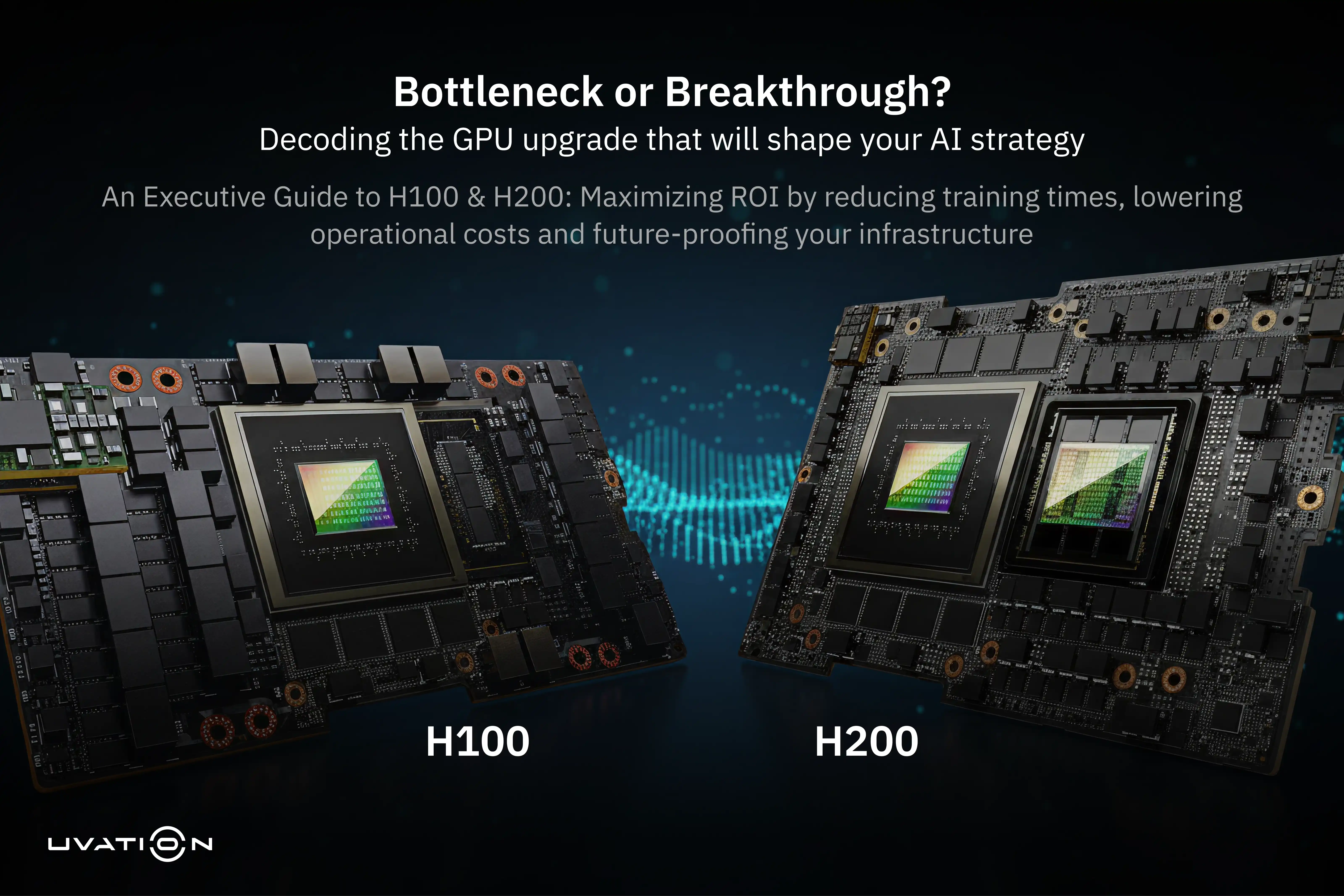
1. NVIDIA H200
- Key Specs: The H200 delivers 2,000 TOPS (trillion operations per second), enabling rapid AI decisions. Its Transformer Engine speeds up models like ChatGPT, while FP8 support cuts memory use without major accuracy loss. This boosts efficiency in complex tasks.
- Why it Leads: NVIDIA dominates cloud and data center deployments due to seamless software tools like CUDA. The H200 is optimized for massive large language models (LLMs), making it the top choice for AI-as-a-service providers.
- Market Position: Research confirms NVIDIA holds the maximum revenue share in inference chips. Its ecosystem partnerships with Google Cloud, AWS, and Microsoft Azure drive widespread adoption.
042. AMD Instinct MI300X
- Key Specs: The MI300X delivers 1,500 TOPS for high-speed AI processing. It packs 192GB of HBM3 memory—ultra-fast storage that feeds data quickly to the chip. Its CDNA 3 architecture is purpose-built for AI workloads, improving both performance and energy efficiency.
- Competitive Edge: AMD shines in memory-heavy tasks like recommendation engines. Its massive memory capacity allows faster analysis of large datasets, outperforming rivals in real-time personalization. This makes it ideal for data centers handling complex AI services.
- Market Adoption: Hyperscalers (large cloud providers like Microsoft Azure and Oracle Cloud) are rapidly adopting the MI300X. Research confirms AMD’s growing share in data center inference, driven by cost advantages over competitors and strong software support.
053. Google TPU v5
- Key Specs: The TPU v5 delivers 1,200 TOPS for powerful AI processing. It uses optical interconnects (light-based data transfer between chips) for faster communication. Its sparsity acceleration feature skips unnecessary zero-value calculations, boosting efficiency in models like recommendation systems.
- Unique Advantage: Built specifically for Google Cloud’s Vertex AI platform, this chip achieves industry-leading low latency (response time). It runs popular AI frameworks TensorFlow and PyTorch faster than most competitors, making it ideal for cloud-based AI services needing instant results.
- Market Position: While primarily used internally, Google’s TPUs power major services like Search and Translate. Their optimization for real-world AI workloads secures a top spot in the AI inference chips’ latest rankings, especially for cloud-native applications.
064. Intel Gaudi 3
- Key Specs: Gaudi 3 offers a performance of over 1,000 TOPS using advanced 7nm manufacturing (smaller, more efficient transistors). It includes 128GB of HBM2e memory, a high-speed type ideal for handling large AI models smoothly.
- Key Strength: It delivers dramatically better performance per watt than its predecessor. This means significant energy savings for the same AI workload, reducing operational costs and environmental impact in data centers.
- Primary Use Case: Designed for demanding enterprise inference tasks, such as running complex chatbots, fraud detection systems, or supply chain optimization models that require sustained high performance and reliability.
075. AWS Inferentia 3
- Key Specs: This chip delivers 800 TOPS for efficient AI processing. Its NeuronLink architecture creates direct, high-speed connections between chips. This avoids communication bottlenecks common in traditional systems, boosting overall speed for complex models.
- Cost Leadership: Inferentia 3 offers a 50% lower cost-per-inference compared to standard GPUs. This means running the same AI task (like image recognition) costs half as much, making it highly economical for large-scale deployments.
- Ideal Workload: Designed for cost-sensitive cloud applications. Examples include high-volume e-commerce product recommendations, social media content moderation, and ad targeting, where minimizing expense per AI operation is critical.
086. Groq LPU (Language Processing Unit)
- Key Specs: The Groq LPU provides 750 TOPS and achieves deterministic latency below 1 millisecond (ms). This means it guarantees near-instant responses every single time an AI task is run, unlike chips with variable speeds.
- Key Breakthrough: Its unique sequential processing approach handles AI tasks step-by-step very rapidly. This is especially efficient for generative AI and large language models (LLMs), allowing it to outperform GPUs in tasks like real-time text generation and summarization.
- Market Position: Groq’s focus on speed and predictability for language AI earns it a distinct place in the AI inference chips’ latest rankings. It is gaining traction for applications demanding instant interaction, such as advanced customer service chatbots and live translation tools.
097. Qualcomm Cloud AI 100 Ultra
- Key Specs: Offering 400 TOPS within an ultra-low 4 Watt (W) power envelope per chip, the AI 100 Ultra is highly efficient. It’s built using a 5 nanometer (nm) manufacturing process, an advanced technique allowing more transistors in a smaller space for better performance and energy savings.
- Market Dominance: Qualcomm is the clear leader for AI chips powering edge devices. It has earned the top position in automotive systems (e.g., Tesla’s enhanced self-driving) and premium smartphones (like Samsung Galaxy AI features), where power efficiency is paramount.
- Why it Ranks: Its exceptional balance of performance and minimal power consumption secures a coveted spot in the AI inference chips’ latest rankings for the edge computing segment. It enables sophisticated AI directly on devices without draining batteries or requiring constant cloud connections.
108. SambaNova SN40
- Key Specs: The SN40 features a Reconfigurable Dataflow Unit (RDU) that can adapt its processing pattern to different AI tasks. It delivers a massive 1 terabyte per second (TB/s) memory bandwidth, allowing rapid access to large datasets without slowdowns. This flexibility supports constantly changing AI models.
- Innovation Highlight: Its software-defined architecture lets users reprogram the chip through APIs instead of hardware changes. This enables dynamic switching between models like vision transformers and language processors without performance penalties.
- Specialized Niche: The chip excels in enterprise RAG (Retrieval-Augmented Generation) pipelines. These systems combine company data with AI models for accurate business intelligence. Examples include legal document analysis and pharmaceutical research, where precision matters most.
119. Cerebras WSE-3
- Key Specs: This wafer-scale engine is the world’s largest single chip, housing 900,000 cores. It contains 44GB of on-chip SRAM (ultra-fast memory), eliminating slow data transfers between components. This design processes entire AI models at once.
- Optimal Use Case: Built for ultra-large models with billions of parameters. Dominates scientific AI workloads like climate simulation, genomics research, and fusion energy modeling where traditional chips would require complex partitioning.
- Industry Recognition: Awarded “Most Innovative 2024” by the AI Accelerator Institute. This recognition solidifies its position in the AI inference chips’ latest rankings for cutting-edge research applications.
1210. Graphcore Bow IPU
- Key Specs: The chip delivers 350 TOPS using 3D stacking technology. This innovative approach layers memory directly atop processors, creating “processor-in-memory” units. Data travels shorter distances, slashing energy use and boosting speed.
- Efficiency Advantage: Graphcore claims 40% higher efficiency than previous IPUs (Intelligence Processing Units). Tests show it achieves more inferences per watt, making it ideal for sustainable AI deployments in energy-conscious data centers.
- Growing Trend: Gaining adoption in Natural Language Processing (NLP) workloads. Its architecture efficiently handles complex language tasks like sentiment analysis and multilingual translation, especially in medium-sized models.
13Top 10 AI Inference Chips Comparison
143. Which Key Trends in AI Inference Chip Domain are Shaping 2025?
The AI inference chip landscape is evolving rapidly, driven by real-world demands for smarter, faster, and greener technology. These four trends are reshaping how chips are designed, deployed, and ranked today, directly influencing the AI inference chips’ latest rankings.
Edge Dominance
Over 60% of new AI chips now target edge devices, according to recent market studies. Edge devices process data locally instead of sending it to the cloud. Examples include smartphones, security cameras, and self-driving cars. This shift reduces latency (delay) and bandwidth costs while enhancing privacy. Chips like Qualcomm’s AI 100 Ultra lead here, prioritizing low power use and compact designs.
Sustainability Focus
Raw performance (TOPS) is no longer the sole benchmark. Energy efficiency—measured as TOPS per Watt (operations per watt of power)—is now critical. Leaders like Intel Gaudi 3 and Graphcore Bow IPU optimize this metric to cut data center electricity costs and carbon footprints. Efficiency is now a top purchasing factor for enterprises.
Modular Designs
Chiplets—small, interchangeable processor blocks—are replacing monolithic chip designs. Companies like AMD and Intel use this approach to create customizable solutions. For example, a carmaker could combine specialized chiplets for vision AI and voice recognition. This flexibility speeds up development and reduces costs while maintaining high performance.
Generative AI Arms Race
Every leading chip is now being optimized for large language models (LLMs) like ChatGPT. Features like sparsity support (skipping unnecessary calculations), FP8 data formats (efficient number handling), and massive memory bandwidth are now standard. This trend dominates the AI inference chips’ latest rankings, with NVIDIA, Groq, and Google TPU v5 securing top spots in LLM inference benchmarks.
154. Where Is the AI Inference Chip Market Headed?
The AI inference chip race shows no signs of slowing. As technology advances, new players and architectures are poised to reshape the market. These developments will influence tomorrow’s AI inference chips’ latest rankings and redefine what is possible.
New Architectures
Photonic chips, which use light instead of electricity to transfer data, will gain traction. They promise near-zero heat and faster speeds for energy-hungry AI tasks. Neuromorphic chips, mimicking the human brain’s structure, will also emerge for low-power pattern recognition. Both aim to overcome current efficiency limits in traditional silicon chips.
NVIDIA Blackwell
NVIDIA’s next-generation Blackwell GPUs will challenge today’s leaders. Early rumors suggest 5x faster LLM inference than the H200. If achieved, this could reset performance benchmarks and dominate future AI inference chips’ latest rankings, especially for generative AI in data centers.
Market Growth Projection
Recent research forecasts that the AI inference chip market will surpass $25 billion by 2027. This explosive growth (over 30% CAGR from 2025) is fueled by demand across cloud, automotive, and edge devices. Cost reductions and energy efficiency gains will make AI accessible to smaller businesses.
16Conclusion
The AI inference chips’ latest rankings confirm NVIDIA and AMD as today’s leaders, driven by their dominance in cloud and data center deployments. NVIDIA excels in large language models, while AMD dominates memory-heavy tasks.
However, challengers like Groq and Cerebras are reshaping niche segments. Groq delivers unmatched speed for generative AI, and Cerebras enables breakthroughs in scientific research with its wafer-scale design.
Your choice of chip should align with specific workloads and efficiency goals. For cloud applications like chatbots or recommendation engines, prioritize raw power (TOPS) and cost-per-inference, where AWS Inferentia 3 or Google TPU v5 shine.
For edge devices like self-driving cars or smartphones, focus on energy efficiency (TOPS/Watt) and compact size, making Qualcomm’s AI 100 Ultra ideal. Always match the chip to your AI’s environment and scale.
As AI scales across industries, innovation in inference chips will dictate the next technological revolution. Efficiency gains, specialized architectures, and sustainable designs—not just raw speed—are becoming critical. Companies that leverage the right chips, as ranked in this analysis, will unlock faster, cheaper, and greener AI capabilities. The leaders of tomorrow are investing in these technologies today.
← Back to Insights