
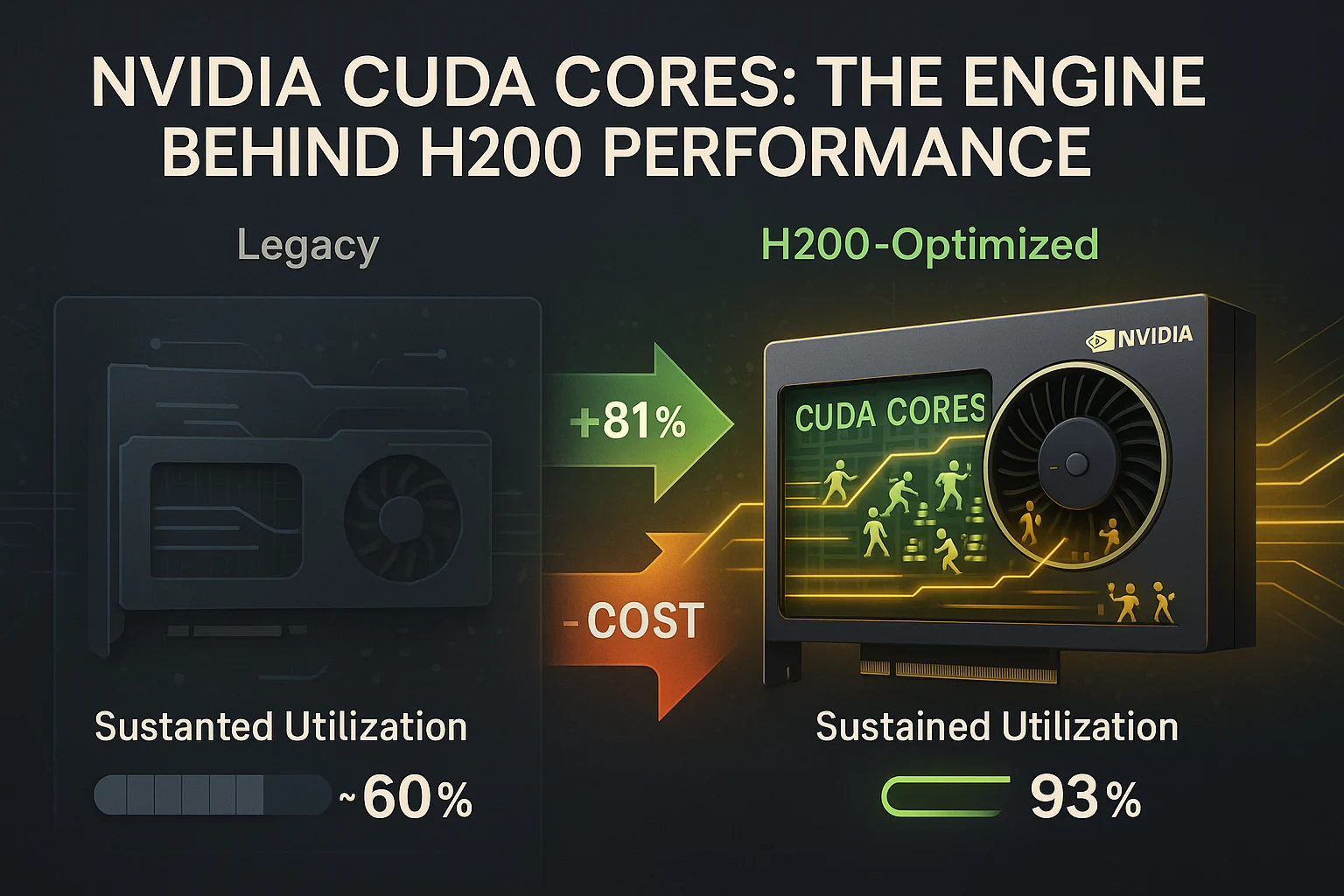
Nvidia CUDA Cores: The Engine Behind H200 Performance
NVIDIA CUDA Cores are the parallel compute units driving AI and HPC workloads, with the H200 GPU representing their fullest expression. The H200 significantly boosts…
•


The idea of giving each student a personalized learning (PL) experience was once considered radical and impractical, but it is quickly becoming a distinct reality. Personalized education is all about giving students control over how they learn and letting them learn at their own pace when it’s most convenient for them. Interest in PL increased during the pandemic when many students were stuck learning from home.
According to empirical studies, the greater implementation of personalized learning practices in schools, “may be related to more-positive effects on achievement,” although further study is needed.
But how can this ambitious ideal be effectively implemented on a large scale?
The answer may lie within the realm of artificial intelligence (AI). Here, we’ll explore how AI can be used to advance PL initiatives as well as what role it can play in the classroom of the future.
Adaptive learning, a key aspect of personalized education, is a teaching method that supports the unique learning pace and knowledge level of individual students. This can be critical to students’ ability to learn because it enables them to progress and grow their knowledge at a pace that works for them.
Adaptive learning has several potential benefits, including allowing students to be more successful and self-directed.
According to Educational Technology, studies have shown that students who learn using adaptive learning models feel like they have more control over their learning and demonstrate more perseverance in program tasks. They also show more confidence and are less dishonest in their academic work.
Teachers can use technology to provide personalized resources and learning activities to enhance students’ understanding and performance.
With AI, adaptive learning systems can continually analyze each student’s learning behaviors and patterns, dynamically adjusting the difficulty level and style of content to meet individual needs. These systems can assess student understanding, identify areas of difficulty, and offer targeted explanations, feedback, and practice exercises.
This ensures that each student is continually challenged, improving learning outcomes and reducing the risk of disengagement.
Intelligent tutoring systems have emerged as another way AI can enhance personalized education. An intelligent tutoring system (ITS) is a computer system that provides immediate and personalized feedback and instructions to students, without the need for human intervention. An ITS is often a critical component of any adaptive learning system.
According to a 2021 systematic review of literature on the effectiveness of ITS, the systems were useful learning aids in helping students learn STEM subsections. One study from 2023 concluded that an ITS “can be very powerful to support teaching and learning.”
These systems use AI to interpret the student’s responses, identify gaps in knowledge, and adjust the instruction accordingly. They can provide interactive, tailored learning experiences that keep students engaged and motivated as part of an adaptive learning program.
An ITS can even incorporate AI as part of an interactive and engaging student experience. AI systems can offer effective support for online learning and teaching, including personalizing learning for students. These systems can mediate interactions between instructors and students and provide additional support to learners.
Natural language processing (NLP), a subfield of AI, is also paving the way for personalized education.
NLP tools can analyze text, understand its context and sentiment, and generate human-like text responses. For example, NLP can provide automated feedback to students on their writing, grammar, and mechanics. This feedback can be provided instantly, which is not possible for teachers to do for every student in a classroom.
NLP can even be used to develop interactive learning materials like chatbots, virtual assistants, and gamification engines. These experiences can engage students and provide personalized feedback to improve their learning outcomes.
AI-powered analytics tools can offer deep insights into student performance. They can monitor a student’s progress, identify strengths and weaknesses, and predict future performance based on past behavior.
However, this application for AI in education is still relatively new.
According to one study, the artificial intelligence educational (AIEd) technologies that are most effective are those that provide “knowledge-based and administrative support. These types of technologies could be more safely introduced than some other types of applications.”
In this way, AI-based performance insights can be revealed on a student-by-student basis, or as a means of determining the performance of an entire school or classroom. These insights can help educators customize lesson plans and interventions, ensuring each student gets the support they need when they need it.
Finally, AI can assist teachers by automating many administrative tasks like grading assignments, creating personalized reports, and tracking attendance. This would free up more time for teachers to focus on educating students and providing more one-on-one assistance.
AI can automate the management of student records, including admissions, enrollment, and academic progress. Traditionally, these tasks have required a significant amount of manual input, even if they are digitized.
AI can automate the generation of reports, such as attendance reports, grade reports, and progress reports. This is one area of education that requires a significant amount of manual work by teachers. AI could potentially free them from at least some of these tasks and potentially reduce the risk of errors.
AI can automate scheduling tasks, such as class schedules, teacher schedules, and exam schedules. This can help educators prevent scheduling conflicts between both students and other educators.
Lastly, AI can automate routine inquiries, such as answering frequently asked questions from students and parents. This can be achieved through an engaging AI chatbot. However, it could also be achieved through a traditional knowledge base, which students and parents can access on their own.
As we look to the future, AI’s role in personalized education will likely continue to grow, providing new and innovative ways to support student learning.
There are still some potential challenges to be addressed, particularly in areas of data privacy and the digital divide. Schools and education leaders must be cautious about how they implement AI in the learning environment. Studies and pilot programs can reveal the efficacy of new AI applications as well as their benefits relative to costs.
By leveraging AI, we can create a more inclusive, engaging, and effective learning environment for all students. Contact our AI experts today to learn more about how you can leverage AI at your educational institution.




We are writing frequenly. Don’t miss that.

Unregistered User
It seems you are not registered on this platform. Sign up in order to submit a comment.
Sign up now