As artificial intelligence continues to advance, the scale of computing required to train and deploy models has grown dramatically. Modern large language models now consist of hundreds of billions to trillions of parameters. Training and running these models demand enormous compute power, high-bandwidth networking, and efficient data pipelines. Traditional enterprise data centers, designed for general-purpose IT workloads, are not equipped to handle this scale of AI computing.
To meet these requirements, NVIDIA developed the DGX SuperPOD. It is a purpose-built AI supercomputing system designed for enterprises, research institutions, and government agencies that need to operate at an industrial scale.
For organizations moving beyond proofs of concept toward enterprise-scale deployments, the DGX SuperPOD represents a path to build AI infrastructure that is both high-performing and dependable.
This blog will examine the architecture, capabilities, and future direction of the NVIDIA DGX SuperPOD, with a particular focus on the role of the DGX H200. It will explore how the system is designed, where it delivers value, and how it positions organizations for the coming wave of large-scale AI adoption.
1. Understanding NVIDIA DGX SuperPOD and Why It Matters
NVIDIA DGX SuperPOD is designed to meet the demands of large-scale AI workloads that exceed the capacity of traditional IT infrastructure. It brings together high-performance compute, networking, and storage in a single engineered system, allowing organizations to run massive training and inference tasks efficiently.
AI Infrastructure Purpose-Built for Scale
At its core, the DGX SuperPOD is a turnkey supercomputing solution designed for artificial intelligence. It provides the compute density required for training trillion-parameter models and the flexibility to run inference workloads at enterprise scale. By delivering a system engineered specifically for AI, it reduces the complexity that organizations often face when building large clusters on their own.
Modular Design for Deployment Growth
The architecture of DGX SuperPOD is modular. This means organizations can begin with a smaller number of racks and expand as their AI requirements grow. Each module is composed of NVIDIA DGX systems, such as the DGX H200, connected through high-speed networking and supported by shared storage. This modular approach allows the infrastructure to support a wide range of deployments, from departmental clusters to data center-scale installations.
Software-Defined Stack for Orchestration
Beyond hardware, the DGX SuperPOD includes a software stack built to manage AI workloads. NVIDIA Base Command provides centralized cluster management and workload scheduling. It allows administrators to allocate resources, monitor performance, and manage user access through a unified interface.
The system also runs an OS tailored for GPU-based workloads, ensuring that hardware and software work together efficiently. Preconfigured AI frameworks and tools further streamline deployment, giving data science teams immediate access to resources without additional setup.
Cohesion Between Hardware and Software
The combination of the modular hardware design and the software-defined stack is what makes the DGX SuperPOD practical for enterprise and research use. It is not simply a collection of servers and GPUs, but a structured system that balances compute, networking, and storage while providing administrators with the tools to operate it effectively. This balance is essential for maintaining performance as workloads grow more complex and data volumes increase.
2. Core Hardware: NVIDIA DGX H200 as the Engine of AI Supercomputing
The NVIDIA DGX H200 is the foundation of the DGX SuperPOD. It is designed to deliver the performance required for the largest AI workloads while maintaining efficiency at scale. Positioned as the successor to the DGX H100, the system represents a significant step forward in GPU memory capacity and bandwidth, making it highly effective for large language models, digital twin simulations, and advanced analytics.
NVIDIA DGX H200 Role in SuperPOD Deployments
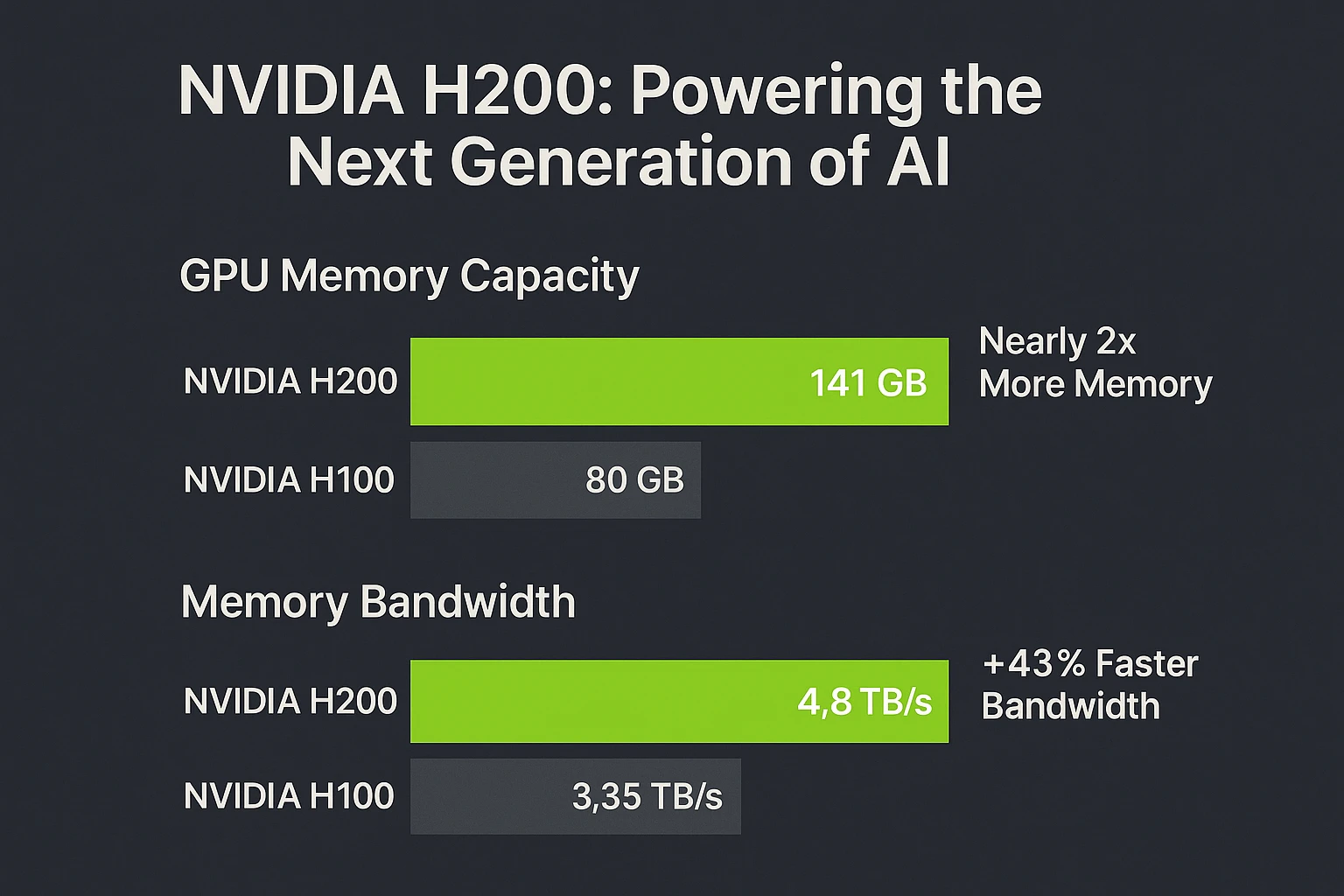
Each DGX H200 is built around NVIDIA H200 Tensor Core GPUs. These GPUs provide 141 GB of HBM3e memory per device, nearly doubling capacity compared to the H100. With memory bandwidth of 4.8 terabytes per second, NVIDIA H200 ensures that large datasets can be moved quickly between compute and memory. This bandwidth is critical for workloads that require real-time processing of vast volumes of data, such as training trillion-parameter models.
The system also delivers better energy efficiency compared to the H100 generation. Higher performance per watt is essential when organizations scale to hundreds or thousands of GPUs, where power and cooling become limiting factors. This efficiency allows DGX SuperPOD deployments to achieve higher throughput while keeping operational costs under control.
Why the H200 Matters for DGX SuperPOD
The DGX H200 plays a central role in enabling DGX SuperPOD to support enterprise and research-scale workloads. For large language models, the expanded GPU memory allows training sequences to handle longer context windows without offloading data to slower storage.
Recommender systems, which rely on processing billions of interactions, also benefit from the additional bandwidth. In scientific domains, digital twin simulations—virtual models of complex physical systems—gain accuracy and speed when supported by H200-based compute nodes.
By addressing these varied needs, the DGX H200 ensures that SuperPOD infrastructure can support both general AI research and industry-specific deployments without hardware reconfiguration.
Comparison with DGX H100
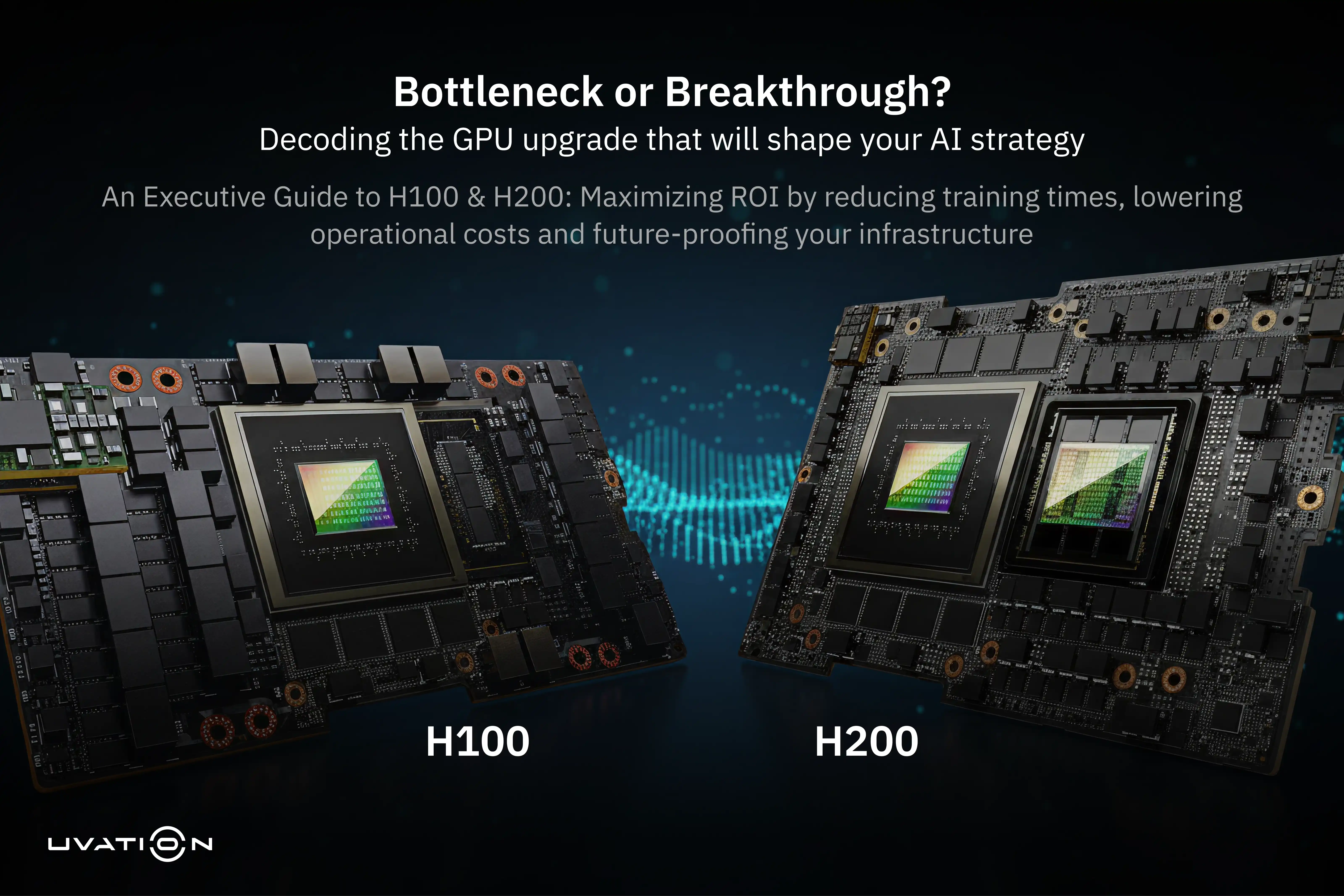
The transition from DGX H100 to DGX H200 highlights measurable improvements. The H100 offered 80 GB of HBM3 memory per GPU with a bandwidth of 3.35 TB/s. The H200 advances both capacity and bandwidth, delivering 141 GB and 4.8 TB/s, respectively. These gains allow for faster training convergence and larger model capacity per GPU.
3. System Architecture: Scaling with SuperPOD
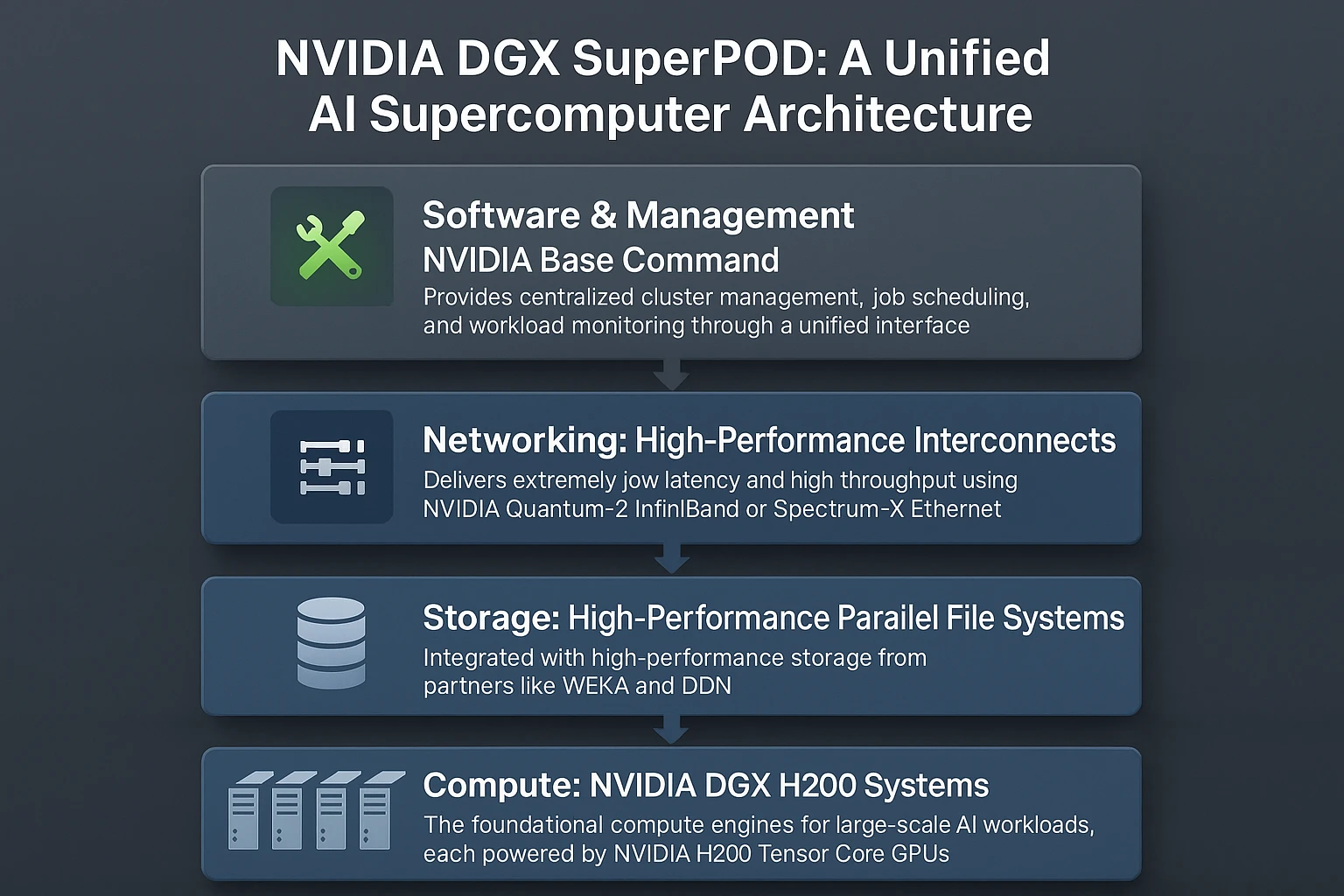
The architecture of the NVIDIA DGX SuperPOD is designed to extend beyond individual nodes and function as a unified AI supercomputer. Each layer—compute, networking, storage, and software—works together to sustain high throughput for the largest AI workloads. This design ensures that organizations deploying DGX SuperPOD can grow from a smaller configuration to a full data center-scale environment without major reengineering.
Nodes and Interconnects
At the foundation are DGX systems, such as the NVIDIA DGX H200, which serve as the compute engines. These nodes are connected through high-performance networking, typically using NVIDIA Quantum-2 InfiniBand or Spectrum-X Ethernet. Both technologies are engineered to deliver extremely low latency and high throughput, which are critical for distributed AI workloads that span hundreds or thousands of GPUs.
InfiniBand provides features such as congestion control and adaptive routing, allowing workloads to maintain consistent performance even when traffic patterns fluctuate. Spectrum-X Ethernet, on the other hand, extends Ethernet networking with features tailored for AI workloads, making it suitable for enterprises standardizing Ethernet infrastructure.
Storage Integration
Feeding GPUs with data at this scale requires storage systems capable of matching the bandwidth demands of compute and networking. DGX SuperPOD supports integration with high-performance parallel file systems from partners such as WEKA and DDN. These systems deliver predictable throughput for large datasets, which is essential when training large language models or running scientific simulations.
For example, WEKA’s data platform uses a distributed file system optimized for GPUs, ensuring that bottlenecks do not occur between storage and compute layers. This alignment between compute and storage ensures that GPU clusters can remain fully utilized, which is vital for both efficiency and time-to-results.
Software Stack
Hardware performance is only useful if it can be orchestrated effectively. To address this, the DGX SuperPOD includes NVIDIA Base Command Manager. This software provides centralized management for cluster operations, including job scheduling, workload allocation, and monitoring. It allows IT administrators to provision resources efficiently and enables data science teams to access computing resources without manual configuration.
The platform also integrates with NVIDIA’s OS for GPU-accelerated systems. This OS ensures that drivers, libraries, and AI frameworks are tuned for the hardware, creating a consistent runtime environment. This reduces variability in performance and helps enterprises maintain predictable results across projects.
Cohesion Across Infrastructure Layers
By combining high-performance compute nodes, advanced interconnects, data-aware storage systems, and an AI-focused software stack, the DGX SuperPOD functions as more than a collection of components. It operates as a coordinated supercomputing platform where each layer is aligned with the requirements of modern AI. This cohesion is what allows the system to handle trillion-parameter models and simulation workloads that would overwhelm conventional IT clusters.
4. Enterprise and Research Use Cases
The NVIDIA DGX SuperPOD is designed to serve a broad set of industries and research fields. Its architecture makes it well-suited for tasks that demand very large-scale computation and rapid data movement. From training language models to advancing national AI programs, DGX SuperPOD has become a platform for organizations seeking to push AI into production at scale.
Training LLMs at Scale
Large language models such as GPT-style architectures require massive compute and memory resources. Training these models involves trillions of parameters, with each iteration demanding high throughput between GPUs and storage systems. The DGX SuperPOD, powered by the NVIDIA DGX H200, addresses these requirements by offering high memory capacity and bandwidth per GPU. This allows organizations to train domain-specific LLMs—for example, models tuned for legal, financial, or healthcare use cases—without offloading data to slower storage layers.
Scientific Research
Beyond enterprise applications, DGX SuperPODs are increasingly deployed in research. Climate scientists rely on GPU-accelerated systems to run high-resolution simulations that predict weather patterns and model long-term environmental changes. In genomics, SuperPODs help analyze sequencing data at scale, enabling faster discoveries in precision medicine. Material science researchers use DGX systems to simulate atomic interactions, accelerating the development of advanced materials These workloads benefit directly from the parallel processing capabilities and high-bandwidth interconnects of the architecture.
Enterprise AI Adoption
Large enterprises, including Fortune 500 companies, have begun deploying DGX SuperPOD to support commercial AI applications. Predictive analytics in finance and retail benefit from the ability to process large historical datasets quickly. Recommendation engines, widely used in e-commerce and media platforms, take advantage of the high throughput for training models that need to handle billions of user-item interactions. Generative design in manufacturing, where AI proposes new product blueprints based on performance constraints, also relies on the capacity of DGX SuperPOD to process complex data sets efficiently.
Government and National AI Infrastructure
Several governments and national research institutions are turning to DGX SuperPOD to establish large-scale AI infrastructure. National AI labs require supercomputing platforms to support multiple domains, from defense research to healthcare systems. By deploying DGX SuperPOD, these institutions gain access to a centralized AI resource that can be shared across multiple projects, ensuring efficiency and consistency in large research programs.
Alignment Across Sectors
The versatility of DGX SuperPOD comes from its ability to address workloads with distinct requirements while maintaining consistent performance. Whether it is training a trillion-parameter model, running a national genomics project, or enabling enterprise-scale recommendation systems, the same underlying architecture provides the foundation. This adaptability is what has positioned DGX SuperPOD as a central infrastructure choice for both private and public sector AI adoption.
5. Operational Benefits for Enterprises
Enterprises adopting AI infrastructure often face challenges in deployment speed, scalability, and energy management. The NVIDIA DGX SuperPOD addresses these needs through a design that shortens deployment cycles, supports gradual growth, and reduces power consumption. This makes it suitable for organizations that want to advance AI initiatives without building bespoke supercomputing systems from scratch.
Faster AI Deployment
Traditional AI infrastructure requires significant time to assemble and configure, often involving separate procurement of servers, networking, and storage systems. DGX SuperPOD reduces this complexity by delivering a reference architecture where hardware, networking, and software are pre-aligned. NVIDIA Base Command provides centralized cluster management and workload scheduling, which lowers the operational overhead during deployment. This allows enterprises to transition from procurement to active training and inference workloads in a shorter timeframe.
Scalable Growth Path
Enterprise AI needs are rarely static. A company may begin with training smaller models or running pilot projects but later expand to workloads involving thousands of GPUs. The DGX SuperPOD is designed to support this progression. It can start with a modest configuration and expand to clusters exceeding 1,000 GPUs. The high-bandwidth interconnects ensure that performance remains consistent as systems are added, which is critical for distributed AI training.
Energy Efficiency
AI infrastructure has a direct impact on energy budgets and sustainability goals. The DGX H200 GPUs used in SuperPOD feature advanced cooling and memory efficiency improvements. Liquid-assisted cooling and streamlined airflow design reduce the power consumed per unit of computation.
In addition, NVIDIA’s software stack provides telemetry and workload scheduling tools that help enterprises monitor and manage energy consumption more effectively. This balance of performance and efficiency enables enterprises to scale their AI workloads while maintaining control over operating costs.
Practical Impact for Enterprises
The combined benefits of faster deployment, structured scalability, and energy-efficient design give enterprises a practical framework for adopting AI at scale. Organizations can shorten the time required to bring AI initiatives online, expand capacity in step with business requirements, and manage long-term energy consumption in line with sustainability objectives. These factors make the DGX SuperPOD an attractive option for enterprises balancing technical ambition with operational constraints.
Table: Benefits of DGX SuperPOD for Enterprises
| Business Requirement |
DGX SuperPOD Capability |
| Training Generative AI Models |
Scales to trillions of parameters with H200 GPUs |
| Time-to-Value |
Pre-configured, ready-to-deploy AI infrastructure |
| Energy & TCO Optimization |
Efficient GPU utilization and advanced cooling |
| Multi-Industry Use |
Applicable across finance, healthcare, R&D, and more |
6. Future Outlook: The Road Ahead for DGX SuperPOD
The NVIDIA DGX SuperPOD is not a static platform. Its roadmap aligns with advances in GPU and CPU architectures, along with evolving AI requirements. Enterprises and research institutions adopting SuperPODs today are positioning themselves for workloads that will extend beyond large language models into multi-modal and exascale AI.
Integration with NVIDIA GB200 and Grace Hopper Superchips
Future SuperPOD configurations will feature the NVIDIA GB200 Grace Blackwell Superchip, which combines two NVIDIA Blackwell GPUs with an NVIDIA Grace CPU through NVLink interconnects. This design reduces data movement bottlenecks and supports energy-efficient training at exascale levels.
By combining Grace Hopper and Blackwell systems within SuperPODs, enterprises will be able to train trillion-parameter models while maintaining performance efficiency. This positions the SuperPOD as a long-term foundation for AI workloads that demand extreme scale.
AI Factories as Infrastructure
NVIDIA describes SuperPODs as the foundation of “AI factories.” In this model, clusters are built to process, train, and refine vast datasets continuously. Similar to how physical factories transform raw materials into finished products, AI factories transform data into trained models. This concept represents the next wave of industrial infrastructure, where enterprises and governments deploy DGX SuperPODs as production-grade systems for generative AI and digital twin applications.
Preparing for Multi-Modal AI
AI is expanding beyond text-based models. Multi-modal workloads—those that combine text, images, video, audio, and even robotics data—require significantly higher memory bandwidth and throughput. The NVIDIA DGX H200, with 141 GB of HBM3e memory per GPU and 4.8 TB/s bandwidth, provides the baseline for this shift. Future SuperPOD configurations with GB200 will extend these capabilities to support generative video, 3D environments, and real-time robotics training at scale.
Expert Insight: The Industry Perspective
During NVIDIA GTC, Jensen Huang emphasized that AI factories will be as vital to the global economy as power plants and data centers. His framing highlights the strategic importance of DGX SuperPODs beyond technology—they are becoming critical infrastructure for nations, enterprises, and research institutions. Enterprises investing today in DGX H200-based SuperPODs are not only enabling near-term AI deployments but also preparing for an AI economy centered on multi-modal and exascale workloads.
Conclusion
For CIOs and IT leaders, the NVIDIA DGX SuperPOD represents a decisive step toward enterprise-scale AI infrastructure. By combining NVIDIA DGX H200 systems with high-performance networking and a software-defined management stack, it offers a proven platform for training large language models, enabling predictive analytics, and supporting advanced simulations.
Investing in the NVIDIA DGX SuperPOD is not about solving today’s workloads alone. It is about establishing an infrastructure base that can evolve with the rapid pace of AI research and enterprise adoption. Businesses that adopt DGX SuperPODs are equipping themselves with a platform designed to sustain AI development at scale, from current enterprise applications to the AI-driven discoveries of the future.





Unregistered User
It seems you are not registered on this platform. Sign up in order to submit a comment.
Sign up now