• FEATURED STORY OF THE WEEK

      H200 Data Center Architecture for HPC & AI—Bandwidth at Scale

      Written by :  
      semifly
      Team Semifly
      4 minute read
      August 27, 2025
      Category : Cloud
      H200 Data Center Architecture for HPC & AI—Bandwidth at Scale

      Introduction: Why H200 is Redefining Data Center Performance


      For years, data centers have been limited by the tug-of-war between raw GPU performance, memory bottlenecks, and operational efficiency. The NVIDIA H200 changes the equation — not just with faster compute, but with higher memory bandwidth, increased capacity, and better performance-to-cost ratios.


      Whether you’re a managed services provider (MSP) or an enterprise architect, getting the most out of H200 is less about just “buying the latest GPU” and more about how you provision, scale, and integrate it into your infrastructure.


      From Legacy Bottlenecks to Modern Efficiency


      Traditional data center GPU deployments — even with powerful predecessors like the H100 — have faced three recurring challenges:


      • Fragmented Memory Access: Workloads that constantly jump across memory blocks slow down throughput and force GPUs to wait for data.
      • Bandwidth Saturation: Inadequate interconnect design causes GPUs to idle while waiting for I/O.
      • Underutilization: Expensive GPUs running well below capacity due to poor workload alignment or orchestration inefficiencies.
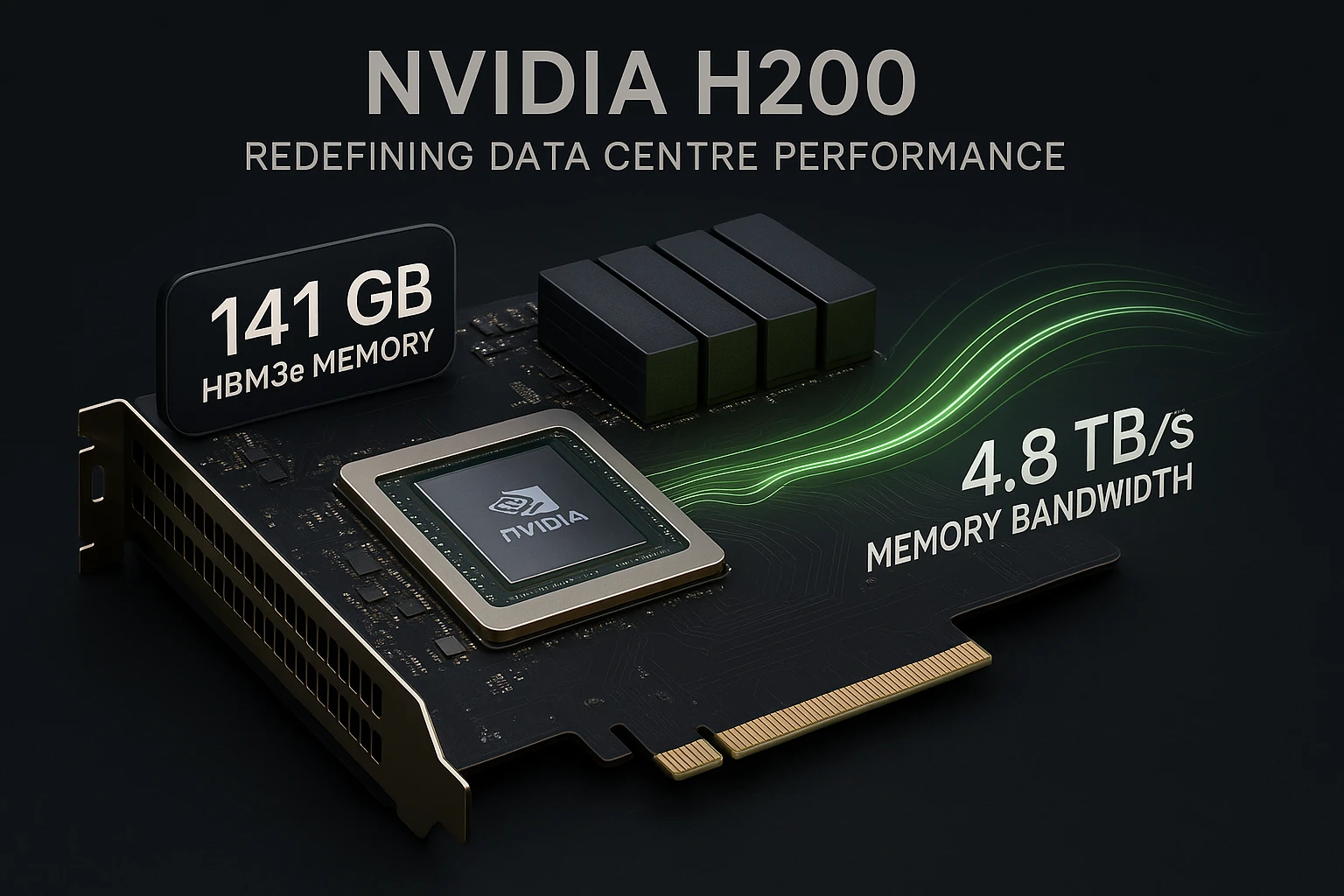
       

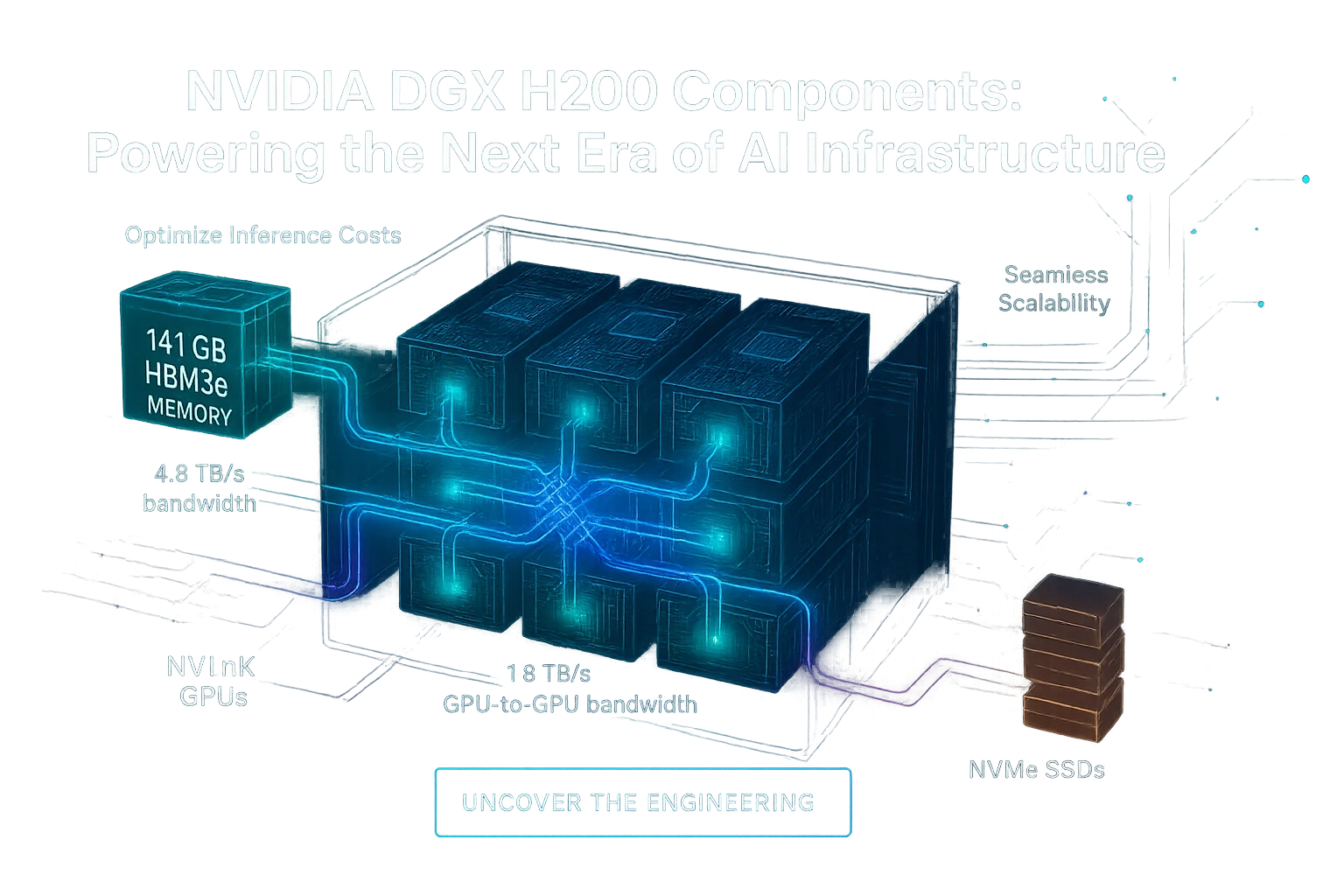
      NVIDIA H200 GPU infographic showcasing 141GB HBM3e memory and 4.8TB/s bandwidth.


      The H200 addresses these pain points with 141 GB of HBM3e memory and 4.8 TB/s bandwidth — but unlocking that power requires an intentional architecture.


      How the NVIDIA H200 Changes the Game


      Before diving into architecture, it’s important to understand why this GPU changes the operational and financial picture:


      • Higher Memory Capacity & Bandwidth: Supports large AI models, multi-modal inference, and HPC workloads without the constant CPU-to-GPU data shuffling.
      • Improved Performance-to-Cost Ratio: Better throughput per watt and per dollar, especially for long-running workloads.
      • Workload Diversity: Handles everything from generative AI to simulation workloads in the same cluster.


      For MSPs, this means delivering more client workloads per cluster and cutting operational costs without sacrificing speed.


      Architecting for Maximum Client Density


      To turn H200’s specs into tangible MSP advantages, every design choice should prioritize client workload density and cost efficiency:


      • High-Bandwidth Interconnect Design
        • Deploy NVLink Switch Systems to ensure that multi-GPU workloads run without cross-node latency.
        • Design topologies that keep most AI model communication intra-node to reduce networking costs.


      • Memory-Aware Workload Scheduling
        • Use NUMA-aware GPU scheduling so data remains in the same HBM3e pool during execution.
        • Group workloads with similar memory footprints to reduce fragmentation and maximize throughput.


      • Tiered GPU Strategy
        • Offer premium tiers powered by H200 for high-bandwidth AI and HPC tasks.
        • Run lower-priority or less memory-intensive workloads on older GPUs to optimize ROI.
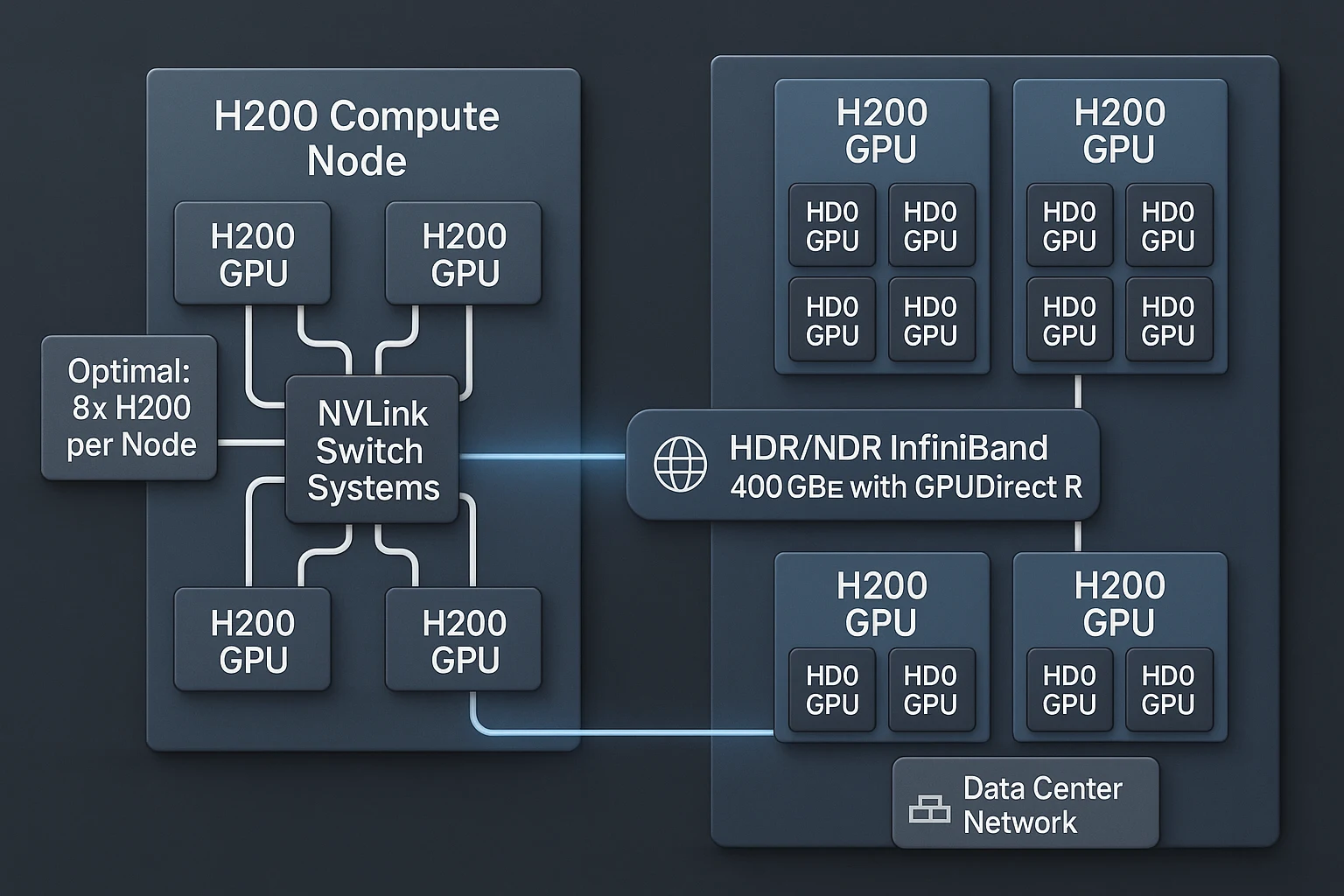
       

      Conceptual diagram of an H200 data centre cluster, showing 8x H200 GPUs per node and high-speed inter-node networking


      Provisioning an H200 Cluster for ROI and Utilization


      A well-provisioned H200 environment can double effective utilization compared to poorly tuned deployments. MSP provisioning best practices include:


      • Define Client Workload Profiles: Map each client’s AI/HPC requirements to GPU resource tiers.
      • Right-Size Nodes: For most AI training farms, 8x H200 per node is optimal for NVSwitch bandwidth without overheating risks.
      • High-Speed Networking: Implement HDR/NDR InfiniBand or 400GbE with GPUDirect RDMA for zero-copy transfers.
      • Containerized Orchestration: Kubernetes with NVIDIA GPU Operator for tenant isolation and flexible scaling.


      Avoiding Common Pitfalls in MSP H200 Deployments


      Even with top-tier hardware, ROI collapses if these are ignored:


      • Idle Capacity from Over-Provisioning – Purchase planning must match contract demand.
      • I/O Bottlenecks During Checkpointing – Use burst buffers to avoid stalling multi-tenant workloads.
      • Memory Fragmentation – Avoid mixing workloads with drastically different memory needs on the same node.
      • Thermal Throttling – Proactively manage cooling for sustained performance.
      • Outdated Software Stacks – Keep CUDA/NCCL versions aligned with H200 optimizations.


      Maximizing Utilization to Increase Margins


      For MSP profitability, utilization discipline is the key lever:


      • Multi-Tenancy with GPU Partitioning: Use MIG or software partitioning to share GPUs between clients without resource conflict.
      • AI-Driven Scheduling: Predict load spikes using historical usage patterns and pre-provision capacity.
      • Performance Profiling: Continuously benchmark workloads to spot under-optimized jobs.
      • Service-Level Packaging: Sell guaranteed performance tiers based on bandwidth and memory, not just GPU count.


      The H200 MSP Advantage in Numbers


      When optimized, H200 clusters can deliver:
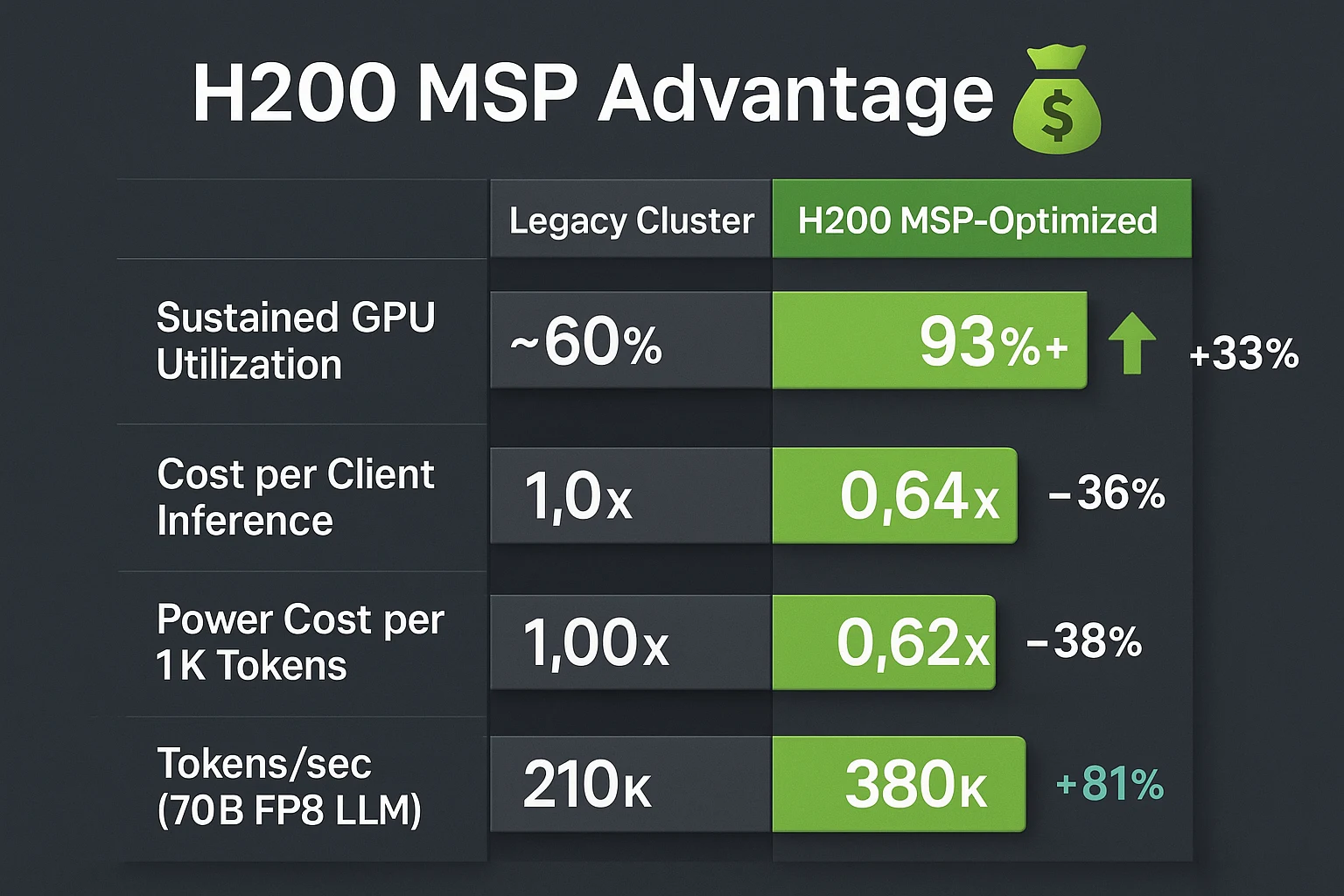
       

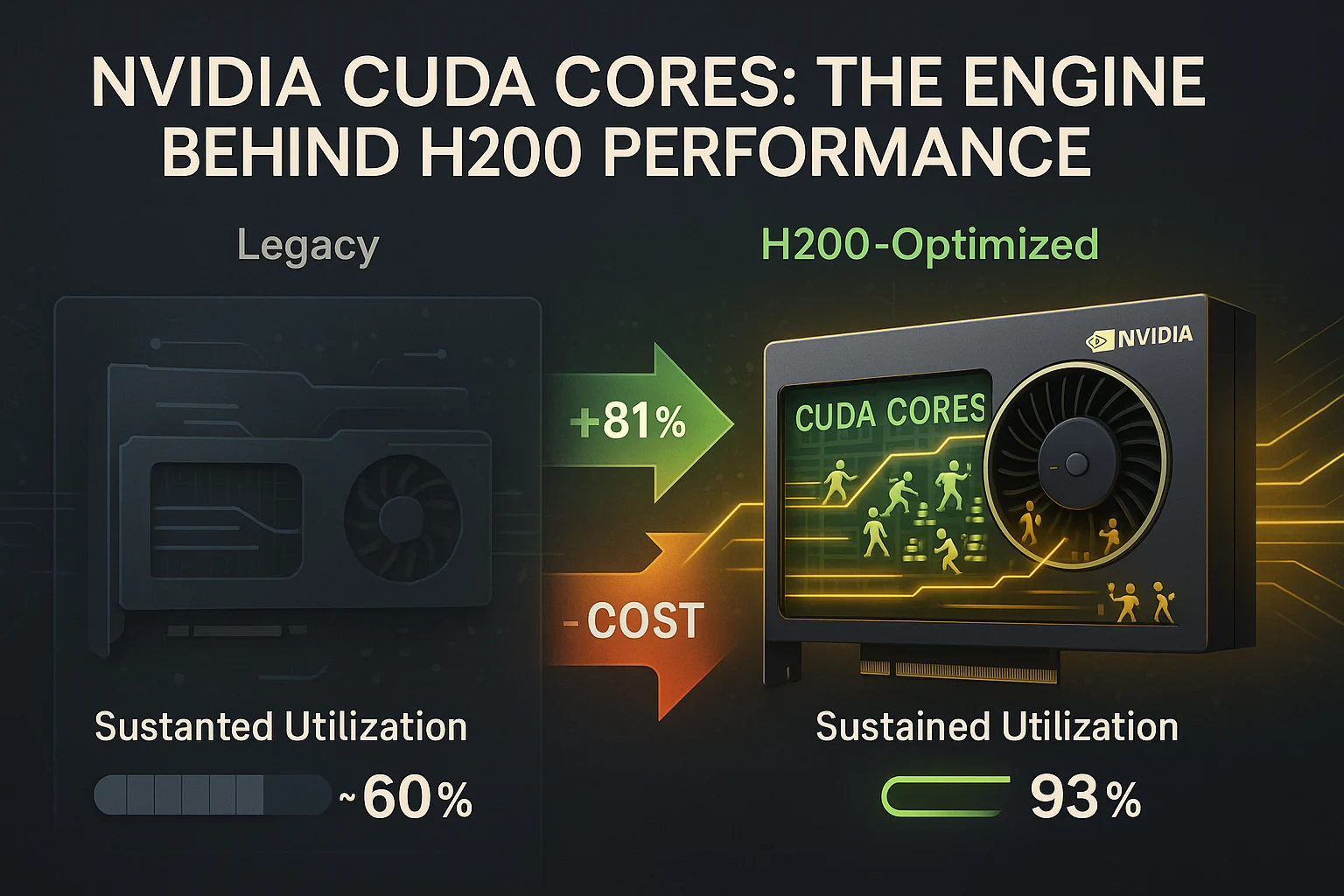
      Comparative infographic showing H200 MSP-optimised cluster advantages over legacy in utilization, cost, and power


      These gains directly translate into higher margins per rack and more billable workloads per GPU.


      Conclusion: Making the H200 Pay for Itself


      For MSPs, the H200 is not just about having the fastest GPUs — it’s about designing a service model and technical architecture that keep those GPUs at 90%+ utilization, across diverse client workloads, without overspending on infrastructure.


      When paired with bandwidth-aware architecture, workload-specific provisioning, and continuous operational optimization, the H200 becomes a profit multiplier — delivering more workloads, at lower cost, with higher speed.

       

      Bookmark me
      Share on
      Comments
      Add your Comment

      Writing About AI

      Semifly

      is an engineer and a technologist with a diverse background spanning software, hardware, aerospace, defense, and cybersecurity. As CTO at Semifly, he leverages his extensive experience to lead the company’s technological innovation and development.

      Explore Nvidia’s GPUs

      Find a perfect GPU for your company etc etc
      Go to Shop

      FAQs

      • Traditional GPU deployments encounter three main challenges: fragmented memory access, where workloads frequently switch memory blocks, slowing throughput; bandwidth saturation, caused by inadequate interconnects leading to GPU idleness; and underutilisation, where expensive GPUs operate below capacity due to poor workload alignment. The NVIDIA H200 tackles these issues with 141 GB of HBM3e memory and 4.8 TB/s bandwidth, significantly improving memory capacity and bandwidth to support large AI models and HPC workloads without constant CPU-to-GPU data shuffling. This also leads to an improved performance-to-cost ratio and the ability to handle a diverse range of workloads within the same cluster.

      • The NVIDIA H200 redefines data centre performance by offering not just faster compute, but crucially, higher memory bandwidth, increased capacity, and better performance-to-cost ratios. For MSPs and enterprise architects, optimising the H200 involves more than simply acquiring the latest hardware; it requires strategic provisioning, scaling, and integration into the existing infrastructure. Its enhanced memory capacity and bandwidth support larger AI models and multi-modal inference, reducing the need for constant data movement between CPU and GPU. This translates into greater workload diversity, allowing MSPs to deliver more client workloads per cluster and cut operational costs without compromising speed.

      • To maximise client density and cost efficiency with H200 clusters, several architectural principles are crucial. These include designing a high-bandwidth interconnect using NVLink Switch Systems to ensure multi-GPU workloads run with minimal latency, and creating topologies that keep most AI model communication within the node to reduce networking costs. Memory-aware workload scheduling is also vital, employing NUMA-aware GPU scheduling to keep data within the same HBM3e pool and grouping workloads with similar memory footprints to reduce fragmentation. Finally, a tiered GPU strategy allows premium H200 tiers for high-bandwidth AI and HPC tasks, while older GPUs handle lower-priority workloads, optimising ROI.

      • To ensure high ROI and utilisation, MSPs should define client workload profiles to match each client’s AI/HPC requirements to appropriate GPU resource tiers. Right-sizing nodes, typically 8x H200 per node for AI training farms, is optimal for NVSwitch bandwidth without overheating risks. Implementing high-speed networking like HDR/NDR InfiniBand or 400GbE with GPUDirect RDMA is essential for zero-copy transfers. Lastly, containerised orchestration using Kubernetes with NVIDIA GPU Operator provides tenant isolation and flexible scaling, doubling effective utilisation compared to poorly tuned deployments.

      • MSPs must avoid several common pitfalls to prevent ROI collapse in H200 deployments. These include idle capacity due to over-provisioning, where purchase planning doesn’t align with contract demand; I/O bottlenecks during checkpointing, which can stall multi-tenant workloads and should be mitigated with burst buffers; and memory fragmentation, which arises from mixing workloads with vastly different memory needs on the same node. Proactive thermal management is necessary to prevent throttling, and keeping software stacks like CUDA/NCCL versions aligned with H200 optimisations is crucial for sustained performance.

      • Maximising utilisation is key to profitability for MSPs. This can be achieved through multi-tenancy with GPU partitioning, using MIG or software partitioning to share GPUs between clients without resource conflicts. AI-driven scheduling helps predict load spikes and pre-provision capacity based on historical usage patterns. Continuous performance profiling of workloads helps identify and optimise underperforming jobs. Finally, offering service-level packaging that sells guaranteed performance tiers based on bandwidth and memory, rather than just GPU count, further enhances profitability.

      • Optimised H200 clusters deliver significant gains over legacy setups. They achieve sustained GPU utilisation of 93%+ compared to approximately 60% in legacy clusters, representing a 33% gain. For a 70B FP8 LLM, tokens per second can increase from 210K to 380K, an 81% gain. This translates into a 36% reduction in cost per client inference and a 38% reduction in power cost per 1,000 tokens. These improvements directly lead to higher margins per rack and more billable workloads per GPU for MSPs.

      • The overarching strategy for MSPs to leverage the H200 as a profit multiplier involves more than just deploying the fastest GPUs. It requires designing a service model and a technical architecture that ensure those GPUs operate at 90%+ utilisation across diverse client workloads, without excessive infrastructure spending. This encompasses combining bandwidth-aware architecture, workload-specific provisioning, and continuous operational optimisation. By doing so, the H200 enables MSPs to deliver more workloads, at a lower cost, and with higher speed, ultimately becoming a significant profit driver.

      More Similar Insights and Thought leadership

      Zero-Trust Security Implementation: How Managed Services Turn Strategy into Continuous Protection

      Zero-Trust Security Implementation: How Managed Services Turn Strategy into Continuous Protection

      Zero-trust security replaces obsolete perimeter defenses with a model that assumes breach and mandates explicit verification for every access request, regardless of location,. Unlike static…
      14 minute read
      Energy and Utilities
      H100 vs H200 Performance Comparison: Decoding the GPU Upgrade That Will Shape Enterprise AI

      H100 vs H200 Performance Comparison: Decoding the GPU Upgrade That Will Shape Enterprise AI

      The NVIDIA H200 GPU enhances the H100, sharing the same Hopper architecture but targeting performance bottlenecks in large-scale AI. The key upgrade is its memory…
      10 minute read
      Energy and Utilities
      Accelerating Workflows with NVIDIA HPC Compilers: Unlocking Performance on NVIDIA H200 GPUs

      Accelerating Workflows with NVIDIA HPC Compilers: Unlocking Performance on NVIDIA H200 GPUs

      The NVIDIA HPC Compiler stack is essential for bridging the gap between the raw power of hardware like the NVIDIA H200 GPU and real-world application…
      18 minute read
      Energy and Utilities
      NVIDIA H200 Regulatory Approvals: Ensuring Safe and Compliant AI and HPC Deployments 

      NVIDIA H200 Regulatory Approvals: Ensuring Safe and Compliant AI and HPC Deployments 

      The NVIDIA H200 GPU has numerous regulatory approvals, which are essential for safe, legal, and reliable deployment of AI and high-performance computing (HPC) workloads globally.…
      8 minute read
      Energy and Utilities
      GPUs in University Research: Powering the Next Era of Discovery

      GPUs in University Research: Powering the Next Era of Discovery

      Universities are increasingly adopting Graphics Processing Units (GPUs) to accelerate research in fields like medicine, climate science, and artificial intelligence, which depend on processing massive…
      14 minute read
      Energy and Utilities
      NVIDIA DGX H200 Power Consumption: What You Absolutely Must Know

      NVIDIA DGX H200 Power Consumption: What You Absolutely Must Know

      The NVIDIA DGX H200 is a powerful, factory-built AI supercomputer designed for complex AI and research tasks. Its high performance, driven primarily by eight H200…
      14 minute read
      Energy and Utilities
      semifly
      About Us